



 917.475.6839
 September 26, 2026
  Tags:
Tags: 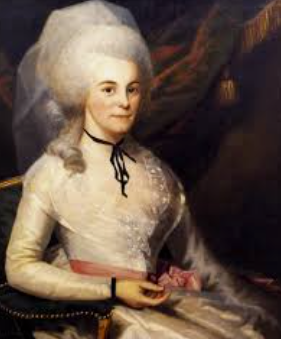
In October 1780, Alexander Hamilton had a war to think about. Instead, he wrote to his fiancée, Elizabeth Schuyler, that she filled his waking hours and appeared in his dreams. “You engross my thoughts too entirely,” he told his “dear Betsey.” Then, amid the declarations of love, came a question any couple planning a wedding might recognize: should he wear his military uniform for the ceremony?¹
Eliza and Alexander had grown close that February near Morristown, New Jersey, where he served on George Washington’s staff. She belonged to a wealthy, influential New York family. He had remarkable prospects but little money. In a letter that summer, Alexander asked whether Eliza could truly relish being “a poor mans wife.” He wanted her to consider the uncertain life she was choosing, even as he hoped she would choose it.²
Their separation during the Revolutionary War produced some of Alexander’s most revealing letters. He could be ardent, funny, and insecure all in the space of a single page. In October, he worried that delays in leaving Washington’s headquarters might make Eliza think he was insufficiently eager to see her. The opposite was true, he insisted: “you become dearer to me every moment.”¹
They married at the Schuyler family home in Albany on December 14, 1780. Weeks later, Eliza wrote to her sister Peggy that she was “the happiest of Woman.” Alexander added a playful postscript to the same letter, warning Peggy to choose a husband carefully. Speaking of his own marriage, he concluded, “I think I have been very fortunate.”³
By 1783, the Hamiltons had settled in New York City. Alexander’s career as a lawyer, political writer, and the nation’s first treasury secretary brought long hours and public battles. Eliza ran their household and raised their eight children. When Alexander planned the Grange, their house in upper Manhattan, he described it to her as a “sweet project” in which he wanted her help. She went on to oversee much of its development while he worked in the city.⁴
Their nearly 24-year marriage also endured a painful public scandal. In 1797, Alexander published an account admitting his affair with Maria Reynolds while defending himself against allegations of financial misconduct. We have too little of Eliza’s own correspondence to say exactly how she responded in private. His affectionate letters are invaluable evidence of their relationship, but they cannot tell her side of every difficult moment.⁵
In July 1804, before his fatal duel with Aaron Burr, Alexander prepared a farewell letter to Eliza. His love for her and their children, he wrote, would alone have persuaded him to avoid the encounter if he believed he could do so honorably. He ended, “Adieu best of wives and best of Women.”⁶
Eliza spent the next half-century making sure Alexander’s work would not disappear with him. She gathered his letters and papers, sought recollections from people who had known him, and defended his reputation against critics. Her determination is especially clear in an 1846 petition asking Congress to support publication of his writings. Alexander had left her his papers for that purpose, she wrote, as the “only remaining legacy he had to bestow.” Her son John Church Hamilton published a collection of his works in 1850–51. Eliza’s efforts helped make the documentary record available to later generations.⁷
She built a legacy of her own, too, through work for poor widows and orphaned children. After her death in 1854, she was buried beside Alexander at Trinity Church in Lower Manhattan.⁴ The Trinity Church Churchyard is a powerful site on the Hamilton & Washington in New York: a place to remember both the founder who wrote so passionately and the woman who worked for decades to preserve his story.
Footnotes
- Alexander Hamilton to Elizabeth Schuyler, October 5, 1780, Gilder Lehrman Institute of American History.
- Alexander Hamilton to Elizabeth Schuyler, August 1780, reproduced and discussed by the Library of America. The Library of America’s introduction also discusses Ron Chernow’s Alexander Hamilton (2004).
- Elizabeth Hamilton’s note and Alexander Hamilton’s postscript to Margarita Schuyler, January 21, 1781, in The Papers of Alexander Hamilton, vol. 2, edited by Harold C. Syrett, 539–40; reproduced by the Gilder Lehrman Institute.
- National Park Service, “Elizabeth Schuyler Hamilton” and “Elizabeth Hamilton Schuyler Timeline.”
- Alexander Hamilton’s draft of the 1797 Reynolds pamphlet, Library of Congress; National Park Service, “Elizabeth Schuyler Hamilton.”
- Alexander Hamilton to Elizabeth Hamilton, July 4, 1804, in The Papers of Alexander Hamilton, vol. 26, edited by Harold C. Syrett, 293; reproduced by the Gilder Lehrman Institute.
- Elizabeth Hamilton, petition to Congress, 1846, National Archives; National Park Service timeline; Library of Congress account of the publication of Hamilton’s papers.


