



 917.475.6839
 June 23, 2026
  Tags:
Tags: 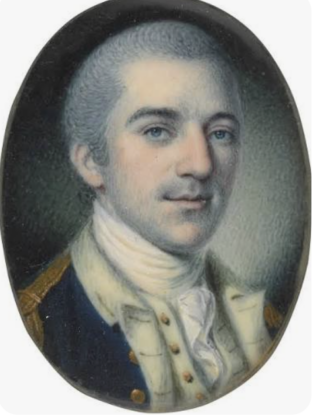
Most people know John Laurens because of Hamilton: The Musical. He’s the fiery young officer who declares, “We’ll never be truly free until those in bondage have the same rights as you and me.”
As it turns out, that wasn’t just good songwriting—it was remarkably close to the historical John Laurens.
Born into one of South Carolina’s wealthiest slaveholding families, Laurens could have spent his life defending the institution that had made his family prosperous. Instead, he became one of the most outspoken opponents of slavery among the Revolutionary generation. While many Patriots spoke about liberty in broad terms, Laurens believed those words had to mean something for everyone.
In 1777, Laurens joined General George Washington’s military family, where he became close friends with Alexander Hamilton and the Marquis de Lafayette. The three young officers shared an infectious optimism about the Revolution and spent countless hours discussing politics, military strategy, and the future of the new nation.
What set Laurens apart was his willingness to confront the Revolution’s greatest contradiction.
Writing to his father, Henry Laurens, in 1779, he observed:
“We Americans, at least in the Southern colonies, cannot contend with a good grace for liberty until we shall have enfranchised our slaves.”¹
It was a remarkable statement for a South Carolinian to make during the Revolution.
Laurens didn’t stop with words. He proposed raising a regiment of enslaved men who would fight for the Patriot cause in exchange for their freedom. He believed the plan would strengthen the Continental Army while striking a blow against slavery itself.
Alexander Hamilton enthusiastically supported the proposal. Writing to Laurens, he challenged the prejudices of the day:
“The contempt we have been taught to entertain for the blacks makes us fancy many things that are founded neither in reason nor experience.”²
Hamilton argued that Black soldiers would prove every bit as capable and courageous as white soldiers if given the chance.
South Carolina’s legislature disagreed. Fearful of arming enslaved men and unwilling to weaken slavery, lawmakers rejected Laurens’ proposal. It was one of the Revolution’s great missed opportunities.
Laurens would not live long enough to see the United States officially gain its independence. In August 1782, with the war all but over, he was killed in a skirmish near the Combahee River. He was only twenty-seven years old.
His death deeply affected Hamilton, who mourned the loss of “a man who has left few equals behind him.”³
Today, Laurens remains one of the Revolution’s most compelling—and often overlooked—figures. He reminds us that even in the 1770s there were Americans who understood that the nation’s promise of liberty could never be complete while slavery endured. The Civil War would eventually answer that question, but John Laurens was asking it nearly eighty years earlier.
👉 Sign up today for the Hamilton & Washington Walking Tour and experience the American Revolution where it happened.
Notes
1. Alexander Hamilton to Nathanael Greene, January 26, 1783, Founders Online, National Archives, https://founders.archives.gov/documents/Hamilton/01-03-02-0204.
2. John Laurens to Henry Laurens, August 14, 1779, in The Papers of John Laurens, vol. 15, ed. Philip M. Hamer et al. (Columbia: University of South Carolina Press, 2003), 301–3.
3. Alexander Hamilton to John Laurens, March 14, 1779, Founders Online, National Archives, https://founders.archives.gov/documents/Hamilton/01-02-02-0245.


