



 917.475.6839
 June 23, 2026
  Tags:
Tags: 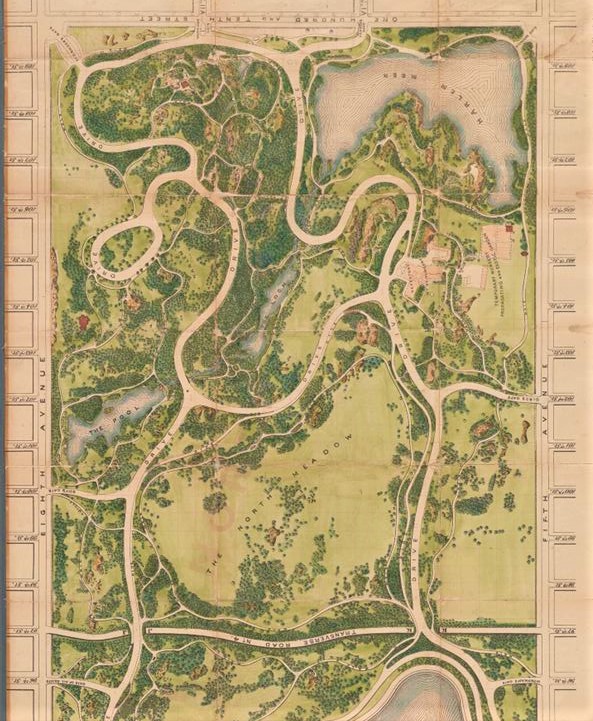
When was the last time you struck up a conversation with a complete stranger?
For many of us, it’s a rare occurrence. We spend hours each day connected to hundreds—even thousands—of people online, yet often know very little about the people who live just a few doors away.
Ironically, this isn’t a new problem.
In the 1850s, New York City was growing faster than almost any city in the world. Tens of thousands of immigrants arrived every year, neighborhoods became increasingly crowded, and the divide between rich and poor was inescapable. Although millions shared the same city, they often lived in very different worlds.
When landscape architects Frederick Law Olmsted and Calvert Vaux designed Central Park, they believed New York needed more than wider streets or taller buildings. It needed a place where people from every background could gather, relax, and simply enjoy being together.
That idea became one of the world’s most influential public parks.
Today, people visit Central Park to bike, picnic, row across the Lake, visit Bethesda Terrace, explore the North Woods, stroll through the Conservatory Garden, or relax beside Harlem Meer. But Olmsted envisioned something much bigger than a beautiful place to spend an afternoon. He believed a great public park could strengthen democracy by bringing together people who might otherwise never cross paths.
A merchant from Fifth Avenue, an Irish laborer, a newly arrived German immigrant, a child from Harlem, and a visiting family could all walk the same paths, admire the same scenery, and enjoy the same public landscape. In an era of growing inequality, that was a revolutionary idea.
Olmsted had a word for it: “communitiveness.” He believed that shared public spaces encouraged people to think beyond themselves and develop a stronger sense of responsibility toward one another. A park wasn’t simply improving the city’s appearance—it was helping create better citizens.
In many ways, Central Park became the original social network.
Unlike today’s digital platforms, there were no profiles to curate, no algorithms deciding who you should meet, and no endless stream of notifications competing for your attention. Instead, the park created something far more meaningful: genuine human connection. A walk beneath the elm trees on the Mall, a quiet moment beside the Pool, or a hike through the North Woods gave New Yorkers an opportunity to experience the city together.
More than 160 years later, that vision still works.
Every year, over forty million visitors from around the world come to Central Park. They may speak different languages, come from different cultures, or live thousands of miles apart, yet for a few hours they share the same paths, bridges, meadows, lakes, and woodlands. Few places in New York City bring together such a diverse cross-section of people.
That’s why Central Park remains one of New York’s greatest achievements. It isn’t simply a masterpiece of landscape architecture—it’s one of the city’s greatest civic spaces.
On our Secret Places of Central Park Tour, you’ll discover many of the park’s hidden gems, including the North Woods, Harlem Meer, the Conservatory Garden, the Pool, the Ravine, rustic bridges, and other places most visitors never see. Along the way, you’ll also uncover the remarkable ideas behind the park’s creation and learn why Frederick Law Olmsted’s greatest achievement wasn’t simply designing a beautiful landscape—it was creating a place where strangers could become neighbors.
👉 Sign up today for the Secret Places of Central Park and experience some of the most beautiful and historical parts of the park.


