
Tag: Best Walking Tours

The Best Brooklyn Walking Tour for Unforgettable New York City Views

Best Brooklyn Tour

Some of New York City’s most spectacular views are not found at the top of a skyscraper. They unfold at street level—while crossing the Brooklyn Bridge, strolling through Brooklyn Bridge Park, and standing above the waterfront on the Brooklyn Heights Promenade.

Our Best of Brooklyn Walking Tour brings these extraordinary landscapes to life through the stories behind them. Led by a licensed New York City tour guide and historian with more than 25 years of experience, this immersive Brooklyn history tour explores the Brooklyn Bridge, DUMBO, Brooklyn Bridge Park, and the tree-lined streets of Brooklyn Heights.

The experience begins with one of the world’s great urban walks: crossing the Brooklyn Bridge from Manhattan to Brooklyn. As the pedestrian walkway rises above the East River, the city gradually opens around you. Look south toward New York Harbor and the Statue of Liberty, west toward Lower Manhattan, and north toward the Manhattan Bridge and the distant Midtown skyline.

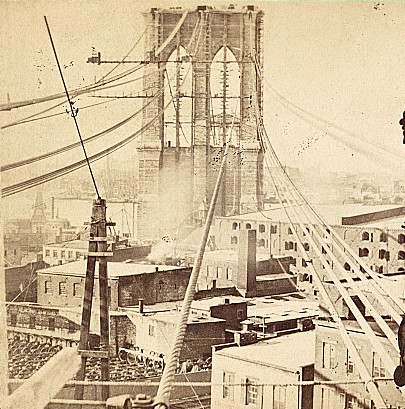
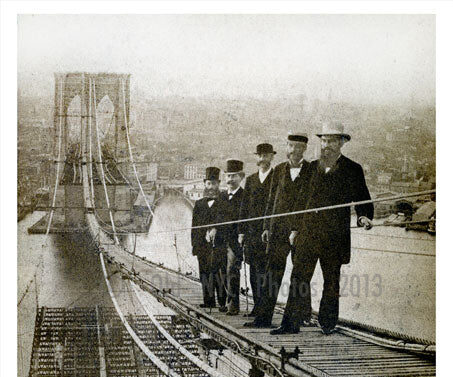
Completed in 1883, the Brooklyn Bridge was the longest suspension bridge in the world at the time. Its construction took 14 years and required remarkable innovation—and tremendous human sacrifice. On the tour, you will hear how John A. Roebling conceived the bridge, how his son Washington supervised its construction after his father’s death, and how Emily Warren Roebling became essential to its completion. The bridge is not simply a beautiful place to take photographs; it is one of the great engineering achievements of the nineteenth century.

After reaching Brooklyn, we enter DUMBO, where massive brick warehouses, Belgian-block streets, and former factories recall the neighborhood’s industrial past. Here, the Manhattan Bridge appears dramatically between the buildings, while glimpses of the Brooklyn Bridge frame the waterfront.

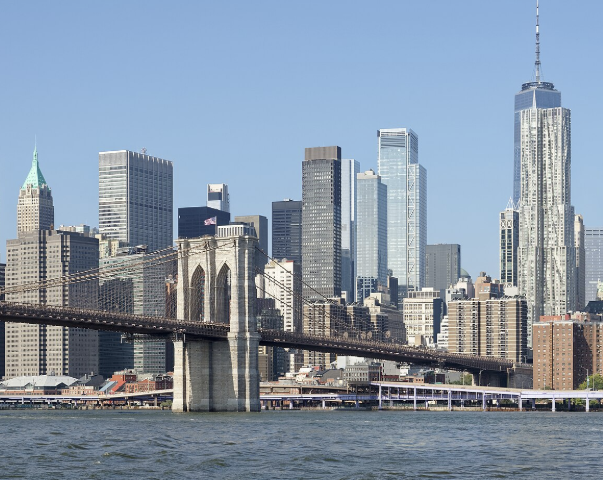
The scenery becomes even more expansive in Brooklyn Bridge Park. Created from a former shipping and industrial waterfront, the park provides sweeping views across the East River toward the towers of Lower Manhattan. From its lawns, pathways, and piers, you can watch ferries floating across the harbor and see the Brooklyn Bridge from below—its stone towers rising above the water. The park’s transformation also tells a larger Brooklyn story: how an aging commercial waterfront became one of New York City’s most impressive public spaces.

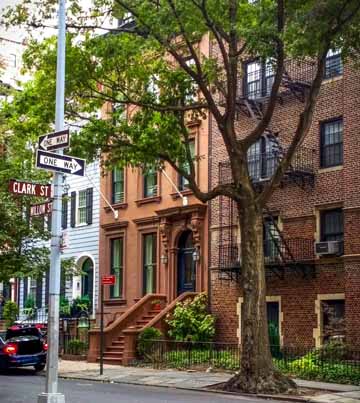
The tour continues into Brooklyn Heights, New York City’s first designated historic district. Its quiet streets are lined with elegant nineteenth-century brownstones, former carriage houses, and churches associated with Brooklyn’s abolitionist history.

The grand finale is the Brooklyn Heights Promenade, an 1,820-foot-long elevated esplanade overlooking Brooklyn Bridge Park, New York Harbor, and the Manhattan skyline. The panorama is considered so important that New York City created a special zoning district to protect it.

This is more than a sightseeing walk. It is a chance to experience the best views in Brooklyn while discovering the history hidden within the landscape. If you are looking for the best Brooklyn walking tour, our historian-led journey offers unforgettable vistas—and the stories that make those vistas meaningful.

Walk through Brooklyn’s scenic panoramas and Brooklyn’s history that helped shape New York City and America. Sign up for the Best of Brooklyn Tour today!

Secret Places of Central Park: Explore the Park’s Hidden North End

Central Park Tour

Most visitors to Central Park follow familiar paths to Bethesda Terrace, Bow Bridge, and the Great Lawn. But north of 100th Street lies another Central Park

—a wilder landscape of waterfalls, forest trails, historic fortifications, secluded gardens, and extraordinary views.

The Secret Places of Central Park Tour takes you beyond the famous landmarks to explore hidden gems that many New Yorkers have never seen. Led by a licensed New York City guide and historian with more than 25 years of experience, this immersive Central Park walking tour combines beautiful scenery with stories grounded in historical research.

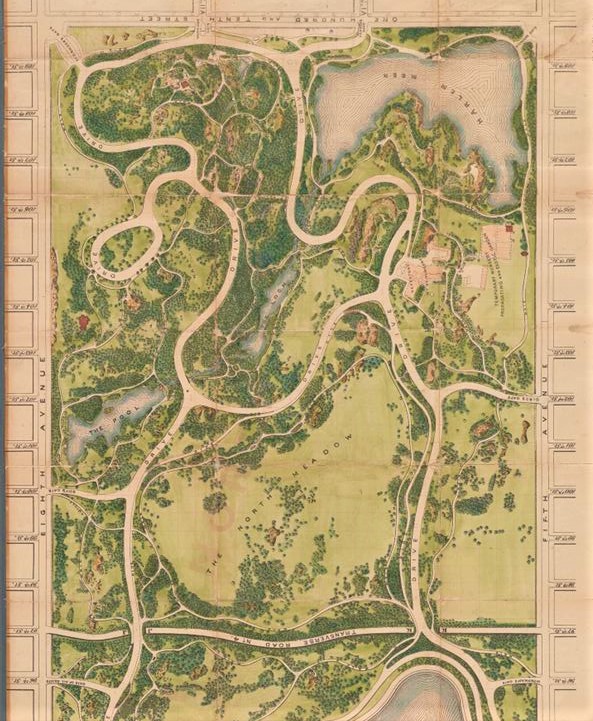
Your journey begins in the North Woods, the largest of Central Park’s three woodland landscapes. Its 40 acres were carefully designed to evoke the forests of the Adirondacks and Catskills. Beneath towering oak, hickory, maple, and tulip trees, winding trails descend into the Ravine, where the Loch flows through pools and cascades before reaching the Harlem Meer. The sound of three waterfalls gradually replaces the noise of Manhattan.

Although the North Woods feels untouched, it is a remarkable work of landscape architecture. Frederick Law Olmsted and Calvert Vaux conceived Central Park as a unified work of art that provides New Yorkers with the restorative experience of nature. Creating that illusion required moving nearly five million cubic yards of earth, stone, and topsoil and planting hundreds of thousand trees, shrubs, and vines.

The tour also uncovers a much older history. You’ll climb to the Blockhouse, constructed in 1814 as part of New York’s defenses during the War of 1812. Perched on a rocky overlook, it is the oldest surviving building in Central Park. Nearby heights were strategically important during the Revolutionary War, when British and Hessian forces controlled the northern approaches to Manhattan.

At historic McGowan’s Pass, you’ll follow the route traveled by George Washington. He rode through the pass during the British invasion of 1776 and returned along this historic post road when the Americans reclaimed New York on Evacuation Day in 1783.

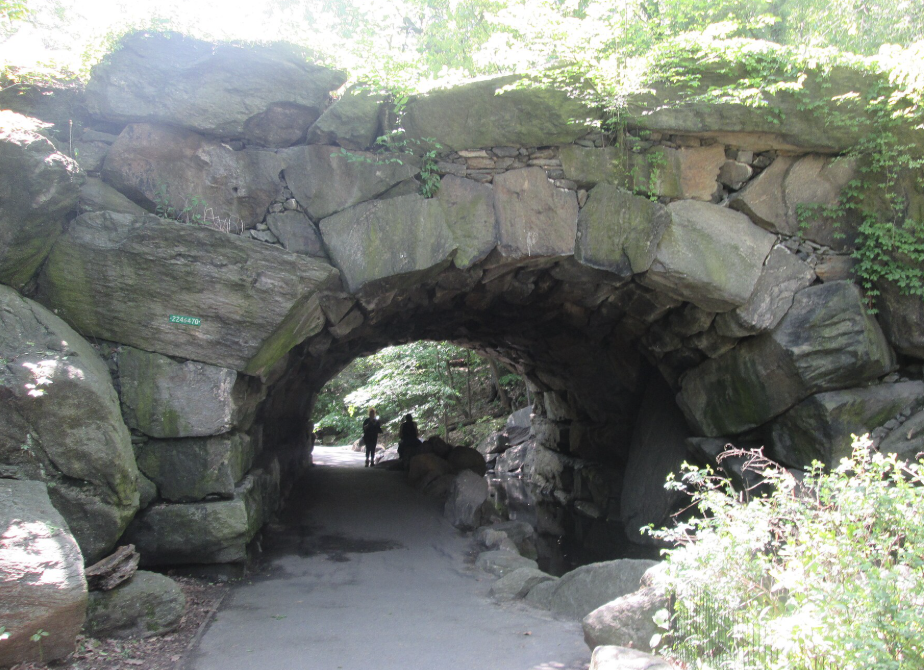
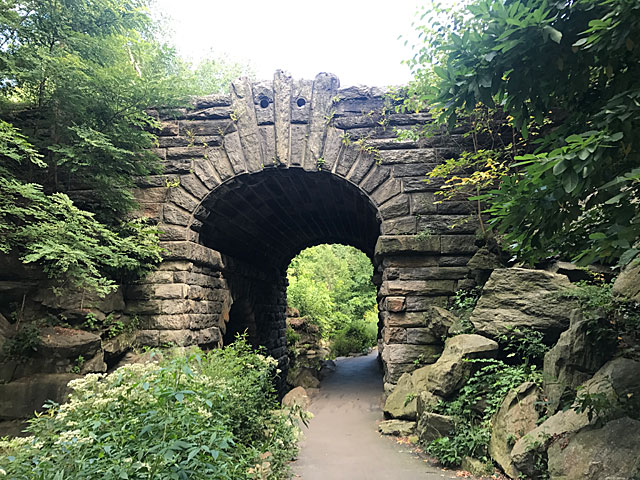
Another unforgettable site is Huddlestone Arch, completed in 1866 from massive, uncut blocks of Manhattan schist. No mortar or cement holds it together. Gravity and the pressure of the stones have supported the East Drive above the arch for more than 150 years.

The landscape changes again at the six-acre Conservatory Garden, Central Park’s only formal garden. Its French, Italianate, and English sections create an oasis of fountains, flowering trees, sculpted hedges, and seasonal color. The magnificent Vanderbilt Gate, made in Paris in 1894, once stood at Cornelius Vanderbilt II’s Fifth Avenue mansion.

You’ll also explore the new Davis Center at the Harlem Meer, an innovative year-round destination where landscape restoration, modern architecture, recreation, and Central Park history come together.

Along the way, you’ll also learn about the people who lived on the land before Central Park, including the predominantly African American community of Seneca Village, whose residents were displaced when the City acquired the parkland in 1857.

Covering approximately 3.25 miles in 2.5 hours, the Secret Places of Central Park Tour is perfect for history lovers, nature enthusiasts, and intellectually curious travelers. If you want to experience Central Park beyond the tourist crowds—and understand the history hidden within its landscapes—this is the walking tour for you.

Sign up for the Secret Places of Central Park Tour today!

Walk the Brooklyn Bridge with a Historian: The Epic Story Beneath Your Feet

Best Brooklyn Bridge Tour

Walking across the Brooklyn Bridge is one of the unforgettable experiences of New York City. The skyline opens around you. The East River moves below. The stone towers rise ahead like cathedral gates. Cars rush beneath the wooden promenade, while cables sweep upward in dramatic arcs toward the sky.

But when you walk the Brooklyn Bridge with a licensed New York City tour guide and historian, the bridge becomes more than a view. It becomes a story.

On our Best of Brooklyn Walking Tour, every step across the bridge reveals a different chapter in one of the greatest engineering dramas in American history. You will hear how this wondrous bridge connected two separate cities — New York and Brooklyn — and helped shape the modern metropolis we know today.

As you pause beneath the soaring Gothic arches, your guide brings you back to the 1870s, when thousands of workers began building what many considered a miracle of modern engineering. You will imagine the dangerous world beneath the river, where men worked inside massive pressurized chambers called caissons, digging by hand in darkness, heat, mud, and compressed air. Some became terribly ill from what we now call decompression sickness, or “the bends.”

You will also hear the dramatic story of the Roebling family. John A. Roebling, the brilliant engineer who designed the Brooklyn Bridge, died before he could see his vision built. His son, Washington Roebling, took over the project but became seriously ill after working in the caissons. Then came Emily Warren Roebling, whose intelligence, determination, and behind-the-scenes leadership helped carry the bridge to completion.

As Manhattan recedes behind you and Brooklyn draws closer, the bridge’s story becomes even more powerful. This was not just a feat of iron, stone, and cable. It was a symbol of ambition, sacrifice, innovation, and New York’s relentless drive to reinvent itself.

By the time you step off the bridge into DUMBO, you will not just have crossed one of the most famous landmarks in the world, you will understand it. You will see why the Brooklyn Bridge became a defining symbol of New York City — and why walking it remains one of the best things to do in NYC.

Join our historian-led Brooklyn Bridge walking tour and experience the bridge not as a postcard, but as a living story beneath your feet. You will also visit DUMBO, Brooklyn Bridge Park, and the first American suburb, Brooklyn Heights.

Walk through Brooklyn’s history that helped shape New York City and America. Sign up for the Best of Brooklyn Tour today!

Best Brooklyn Walking Tour: The Brooklyn Bridge, DUMBO, Brooklyn Heights, and the Stories That Built New York

Best Brooklyn Bridge Tour


Brooklyn is not just a place you visit. It is a story you walk through.

On the Best of Brooklyn Walking Tour, guests experience some of the most iconic and fascinating places in New York City: the Brooklyn Bridge, DUMBO, Brooklyn Bridge Park, and Brooklyn Heights. Led by a licensed New York City tour guide and historian with more than 25 years of experience, this immersive Brooklyn walking tour brings together Revolutionary War drama, Gilded Age engineering, abolitionist history, architecture, waterfront views, film locations, and Brooklyn’s modern cultural revival.

The tour begins with the people who helped shape the history of Brooklyn and New York: George Washington, Jackie Robinson, Walt Whitman, Henry Ward Beecher, and the extraordinary figures behind the Brooklyn Bridge. As you walk across the world-famous bridge, you will discover why it was considered one of the greatest engineering achievements of the 19th century. Its construction took nearly 14 years and involved danger, political struggle, technical brilliance, and personal sacrifice. You will also hear the remarkable story of Emily Warren Roebling, who helped guide the project after her husband, Washington Roebling, became seriously incapacitated.

Crossing the Brooklyn Bridge is unforgettable, but this tour goes far beyond the view. Once in Brooklyn, you will explore DUMBO, a neighborhood where old warehouses, factories, and cobblestone streets have been transformed into one of New York City’s most exciting cultural and creative districts. Today, DUMBO blends industrial history with modern design, technology, food, and art. Guests can even stop near Jacques Torres Chocolate, one of New York’s best-known chocolatiers.

From there, the tour continues into Brooklyn Bridge Park, one of the most spectacular waterfront parks in NYC. With sweeping views of Lower Manhattan, the East River, and the Brooklyn Bridge, it is one of the most scenic places in New York for photography. You will also see Jane’s Carousel, a beautifully restored 1922 carousel enclosed in a striking glass pavilion.

But Brooklyn’s most dramatic story reaches back to 1776, during the Battle of Brooklyn, the largest battle of the American Revolution. After a devastating defeat, George Washington’s army escaped across the East River under cover of darkness and providential weather. That daring retreat helped save the American Revolution from possible collapse. On this Brooklyn history tour, you will stand near the waterfront where this extraordinary evacuation unfolded.

The tour then moves into elegant Brooklyn Heights, one of New York City’s most beautiful historic neighborhoods. Its tree-lined streets and 19th-century townhouses have been home to writers, artists, actors, reformers, and celebrities. You will see locations connected to Truman Capote, the classic film Moonstruck, and the neighborhood’s rich literary and architectural past.

A major highlight is Plymouth Church, once led by the powerful abolitionist preacher Henry Ward Beecher. Known as an important center of anti-slavery activism, Plymouth Church was sometimes called the “Grand Central” of the Underground Railroad in the New York area. Abraham Lincoln visited the church before becoming president, adding another layer to Brooklyn’s national significance.

This is not a scripted sightseeing tour filled with trivia. It is a historian-led Brooklyn walking tour designed for curious travelers who want depth, storytelling, and unforgettable views. Whether you are interested in the Brooklyn Bridge, Revolutionary War New York, Brooklyn Heights architecture, DUMBO history, or simply want one of the best walking tours in NYC, this experience reveals why Brooklyn has always been a place of innovation, reinvention, and revolution.

Don’t just visit Brooklyn. Walk through the history that helped shape New York City and America. Sign up for the Best of Brooklyn Tour today!

Central Park Was the Original Social Network

Best Central Park Walking Tour


When was the last time you struck up a conversation with a complete stranger?

For many of us, it’s a rare occurrence. We spend hours each day connected to hundreds—even thousands—of people online, yet often know very little about the people who live just a few doors away.

Ironically, this isn’t a new problem.

In the 1850s, New York City was growing faster than almost any city in the world. Tens of thousands of immigrants arrived every year, neighborhoods became increasingly crowded, and the divide between rich and poor was inescapable. Although millions shared the same city, they often lived in very different worlds.

When landscape architects Frederick Law Olmsted and Calvert Vaux designed Central Park, they believed New York needed more than wider streets or taller buildings. It needed a place where people from every background could gather, relax, and simply enjoy being together.

That idea became one of the world’s most influential public parks.

Today, people visit Central Park to bike, picnic, row across the Lake, visit Bethesda Terrace, explore the North Woods, stroll through the Conservatory Garden, or relax beside Harlem Meer. But Olmsted envisioned something much bigger than a beautiful place to spend an afternoon. He believed a great public park could strengthen democracy by bringing together people who might otherwise never cross paths.

A merchant from Fifth Avenue, an Irish laborer, a newly arrived German immigrant, a child from Harlem, and a visiting family could all walk the same paths, admire the same scenery, and enjoy the same public landscape. In an era of growing inequality, that was a revolutionary idea.

Olmsted had a word for it: “communitiveness.” He believed that shared public spaces encouraged people to think beyond themselves and develop a stronger sense of responsibility toward one another. A park wasn’t simply improving the city’s appearance—it was helping create better citizens.

In many ways, Central Park became the original social network.

Unlike today’s digital platforms, there were no profiles to curate, no algorithms deciding who you should meet, and no endless stream of notifications competing for your attention. Instead, the park created something far more meaningful: genuine human connection. A walk beneath the elm trees on the Mall, a quiet moment beside the Pool, or a hike through the North Woods gave New Yorkers an opportunity to experience the city together.

More than 160 years later, that vision still works.

Every year, over forty million visitors from around the world come to Central Park. They may speak different languages, come from different cultures, or live thousands of miles apart, yet for a few hours they share the same paths, bridges, meadows, lakes, and woodlands. Few places in New York City bring together such a diverse cross-section of people.

That’s why Central Park remains one of New York’s greatest achievements. It isn’t simply a masterpiece of landscape architecture—it’s one of the city’s greatest civic spaces.

On our Secret Places of Central Park Tour, you’ll discover many of the park’s hidden gems, including the North Woods, Harlem Meer, the Conservatory Garden, the Pool, the Ravine, rustic bridges, and other places most visitors never see. Along the way, you’ll also uncover the remarkable ideas behind the park’s creation and learn why Frederick Law Olmsted’s greatest achievement wasn’t simply designing a beautiful landscape—it was creating a place where strangers could become neighbors.
👉 Sign up today for the Secret Places of Central Park and experience some of the most beautiful and historical parts of the park.

Revolutionary War New York City: The Stamp Act and Statue of George III

New York City Revolutionary Tour


Long before the first shots of the Revolutionary War, New York City was already a center of colonial resistance. As a busy Atlantic port, commercial hub, and political meeting ground, New York felt the pressure of British imperial policy intensely. The Stamp Act crisis of 1765 made that clear. Delegates from nine colonies gathered in New York in solidarity at the Stamp Act Congress, one of the first coordinated intercolonial protests against Parliament’s claim to tax the colonies without their consent. Its resolutions insisted that colonists possessed the rights of Englishmen and could not be taxed without representation.

In the streets, resistance became more dramatic. New York’s Sons of Liberty, merchants, artisans, laborers, and ordinary residents pushed back against royal authority through protests, boycotts, and public demonstrations. Historian F. L. Engelman’s study of Cadwallader Colden and the New York Stamp Act riots shows how volatile New York became in 1765, as imperial policy collided with local fears about liberty, commerce, and political power.

By 1776, New York City had become one of the most strategically important places in North America. Whoever controlled New York controlled a deep-water harbor, access to the Hudson River, connections to the interior, and a base from which to divide New England from the rest of the colonies. George Washington understood the danger. After the British evacuated Boston, he shifted his attention to New York, writing Congress in April 1776 that he would exert himself to frustrate British designs.

That summer, New York became the stage for one of the Revolution’s most symbolic public moments. On July 6, 1776, John Hancock sent Washington the newly adopted Declaration of Independence and asked that it be proclaimed “at the Head of the Army.” Three days later, Washington’s general orders from headquarters in New York directed that the Declaration be read aloud to the assembled brigades at six o’clock in the evening.

The reaction was unforgettable. After hearing the Declaration, a crowd moved down Broadway to Bowling Green, where an equestrian statue of King George III had stood since 1770. It was a tribute to the king for winning the French & Indian War and repealing the Stamp Act in 1766. The statue, cast in lead and gilded, represented royal power at the southern tip of Manhattan. On July 9, 1776, New Yorkers and soldiers pulled it down. The Metropolitan Museum of Art notes that the fallen monument was later melted into bullets for the Patriot cause. Art historian Albert Boime and others have treated the event as political theater: not merely vandalism, but a symbolic rejection of monarchy in the very city that Britain most needed to control. Wendy Bellion’s and Albert Marks’s scholarship on Revolutionary iconoclasm places the destruction of royal imagery within a larger Atlantic-world language of political rupture.

Yet the triumph was short-lived. In August 1776, the British launched a massive campaign against New York. After the Battle of Long Island, the invasion of Manhattan, and Washington’s retreat, New York City fell under British occupation for seven years. Mount Vernon’s historical summary notes the scale of the British force and the beginning of occupation after the 1776 campaign, while also emphasizing the city’s complex wartime world of Loyalists, Patriots, enslaved people, refugees, soldiers, and black-market trade.

That is why the Revolutionary War in New York City matters so much. The city was not a side story. It was a military prize, a political battleground, a symbol of independence, and later the place where Washington returned in triumph after the British evacuation in 1783.

👉 To experience this history where it happened, join Revolutionary Tours NYC’s Washington & Hamilton: Secrets of the Past walking tour.

This historian-led New York City Revolutionary War tour explores Lower Manhattan, Bowling Green, Fraunces Tavern, Wall Street, Federal Hall, Trinity Church, and the streets where America’s fight for independence came alive. For travelers searching for the best historical tours in NYC, Revolutionary War tours in New York City, Hamilton tours in NYC, or walking tours of historic Lower Manhattan, this is the story behind the stones.

Discover the Hidden Wonders of Northern Central Park

Best Central Park Tour


If you’re searching for the best Central Park walking tour, most options focus on the famous southern landmarks—but true magic lies in the north. The “Secret Places of Central Park” walking tour above 100th Street reveals hidden landscapes, rich history, and breathtaking scenery that most visitors never experience. This is where a historian-led Central Park walking tour truly stands apart. Encounter one of the best Central Park tour experiences.

At Central Park’s northern end, far from the crowds, you’ll discover a side of the park that feels like a wilderness escape. Designed by Frederick Law Olmsted and Calvert Vaux, this area reflects their vision to “translate democratic ideas into trees and dirt.” On a guided Central Park tour, you’ll explore the North Woods, a 40-acre forest filled with oak, hickory, maple, and ash trees—an immersive landscape that feels more like the Adirondacks than Manhattan.

One of the highlights of any Central Park sightseeing tour in the north is the Loch, a winding stream with cascading waterfalls that creates a peaceful, almost cinematic setting. Along the way, you’ll pass beneath Huddlestone Arch, an engineering marvel built in 1866 using uncut Manhattan schist without mortar. This stop alone makes the best Central Park tours unforgettable, blending natural beauty with 19th-century craftsmanship.

History is woven into every step of this Central Park guided tour. On higher ground stands the Blockhouse, the park’s oldest original structure, dating back to the War of 1812. This site offers a powerful connection to early American history. You’ll encounter fort areas that the British occupied for seven years of the Revolutionary War, and a path that George Washington used on several occasions. A Central Park history tour brings these stories vividly to life, transforming a simple walk into an engaging journey through time.

The visit to the Conservatory Garden provides a surprising landscape along the tour. You’ll step into three formal European-style gardens hidden within the park. This stop is often a favorite on a Central Park private tour or small-group experience, offering a peaceful escape from the city. Nearby, the Harlem Meer opens into sweeping views that make you forget you’re in New York City. It’s moments like these that define the top-rated Central Park tours—unexpected, serene, and deeply memorable.

Beyond the scenery, the most meaningful Central Park tours in NYC also explore what came before the park. The landscape was once home to Seneca Village, a thriving African American and immigrant community. A historian-led Central Park walking tour provides insight into this important and often overlooked history, adding depth and perspective to the experience.

For travelers searching for the best walking tours in New York City, the Secret Places of Central Park walking tour offers something truly unique: fewer crowds, richer stories, and landscapes that feel untouched. Whether you’re interested in nature, history, or simply discovering hidden gems, a Central Park walking tour in the north delivers an unforgettable experience—one that reveals the park as it was meant to be seen.
👉 Sign up today for the Secret Places of Central Park and experience some of the most beautiful and historical parts of the park.

The Hamilton & Burr Duel Letters

Best Hamilton Tour in New York City

The duel between Aaron Burr and Alexander Hamilton on July 11, 1804 was one of the most infamous events in American history, rooted in fierce political rivalry and personal animosity. Their conflict erupted after a contentious New York gubernatorial race, where Burr, then Vice President, lost to Morgan Lewis, partly due to Hamilton’s vocal opposition to his candidacy. The final catalyst for the duel came when a letter from Dr. Charles D. Cooper, published in the Albany Register, accused Hamilton of describing Burr as an untrustworthy “dangerous man,” and of having expressed “a still more despicable opinion” of Burr.

The Cooper Letter in the Albany Register

Dr. Cooper’s letter read:

“I assert that Gen. Hamilton and Judge Kent have declared, in substance, that they looked upon Mr. Burr to be a dangerous man, and one who ought not to be trusted with the reins of government.” (1)

Cooper further reported Hamilton’s supposed utterance of an even worse “despicable” opinion, which triggered Burr to confront Hamilton directly. This public airing of private resentments created a scandal Burr felt demanded satisfaction.

Burr’s Letters to Hamilton

Upon seeing Cooper’s published remarks, Burr sent his first challenge letter to Hamilton on June 18, 1804:

“You must perceive, sir, the necessity of a prompt and unqualified acknowledgement or denial of the use of any expression that would warrant the assertions of Dr. Cooper.” (2)

Burr demanded Hamilton either confirm or deny he made the statements attributed to him. Hamilton’s reply was evasive, refusing a categorical answer, which inflamed the conflict. Burr followed up with another letter dated June 22:

“I relied with unsuspecting faith that from the frankness of a Soldier and the Candor of a gentleman I might expect an ingenuous declaration; that if, as I had reason to believe, you had used expressions derogatory to my honor, you would have had the Spirit to Maintain or the Magnanimity to retract them…” (3)

Burr made clear that only an explicit apology or retraction would suffice, expressing disappointment at what he saw as Hamilton’s equivocation.

Hamilton’s Responses

Hamilton’s replies were measured but firm. In his June 20, 1804 letter, Hamilton rebuffed Burr’s demand:

“I have become convinced, that I could not, without manifest impropriety, make the avowal or disavowal which you seem to think necessary.” (4)

Hamilton further explained that his statements about Burr were general political criticisms and not a direct attack on Burr’s honor. He conceded to “abide by the consequences,” implicitly accepting the possibility of a duel. Throughout these exchanges, Hamilton maintained a tone of civility and principle, while trying to avoid a public retraction and escalation, but Burr saw this as evasion.

The Path to the Duel

The repeated written refusals to apologize and escalating tone brought both men to an impasse. Burr closed his final letter:

“Thus, sir, you have invited the course I am about to pursue, and now your silence impose it upon me.” (5)

Hamilton, meanwhile, prepared drafts in case he would not survive, expressing his moral aversion to dueling but accepting the practical realities of honor and reputation in that era.

These exchanges show how the collision of politics and pride produced one of America’s defining moments, ending in Hamilton’s early demise and reshaping the early republic’s view of honor and violence.

The unfortunate conclusion of the Burr–Hamilton duel reveals a profound complexity at the heart of their relationship, shaped by fifteen years of political rivalry, deep-seated mistrust, and competing ambitions for influence in the new nation. Though both men had worked together in law and served in the American Revolution, their differences became irreconcilable as Burr’s flexible political allegiances repeatedly clashed with Hamilton’s principled Federalism, leading Hamilton to view Burr as an obstacle to the country’s future. Hamilton’s letter before the duel admitted no personal hatred, but emphasized his duty to oppose Burr for the greater good.

For both Hamilton and Burr, the concept of honor was not merely personal character, but a public currency essential for survival in the Early Republic. Burr’s demand for a full retraction was rooted in the era’s sometimes unforgiving standards, where reputation dictated power; refusing the challenge would have meant public humiliation and hence political death for either man. Hamilton, meanwhile, struggled with the moral consequences of dueling but understood that conceding would compromise his usefulness and legacy as a leader.  Ultimately, their ideas of honor forced them onto the dueling ground—not out of animosity alone, but from a belief that only through defending reputation could they uphold their dominance, even at ultimate personal cost. The heartbreak was not just in the loss of Hamilton’s life, but in the way their fixation on personal honor transformed a private quarrel into a moment that transformed early American political culture.

Explore Alexander Hamilton and Aaron Burr in the Hamilton & Washington in New York walking tour, offered as both a public and private tour. Book the tour today!

Sources:

  1. Founders Online: Enclosure: Charles D. Cooper to Philip Schuyler, April 23, 1804
  2. The June 18 Letter – Hamilton’s Choice
  3. Aaron Burr Challenges Alexander Hamilton, 1804 | Gilder Lehrman
  4. Hamilton-Burr Duel (U.S. National Park Service)
  5. Aaron Burr Challenges Alexander Hamilton, 1804 | Gilder Lehrman

Bethesda Terrace: The Heart of Central Park

Best NYC Central Park Tour

Nestled at the crossroads of Central Park’s most scenic landscapes, Bethesda Terrace stands as a testament to visionary design, artistic collaboration, and the enduring power of public space. More than just an architectural marvel, the Terrace is the symbolic and social heart of Central Park- a place where nature, art, and community converge in spectacular fashion.

A Vision for the People

The story of Bethesda Terrace begins with the ambitious vision of Frederick Law Olmsted and Calvert Vaux, the masterminds behind Central Park’s celebrated “Greensward Plan.” Their goal was revolutionary: create a park that offered city dwellers a restorative escape into nature, while also providing spaces for social interaction and cultural enrichment. Olmsted, a pioneer in landscape architecture, believed in the transformative power of green spaces for public health and social well-being. Vaux, the British-born architect, brought a keen sense of structure and artistry to the project, ensuring that architectural elements complemented the park’s naturalistic beauty.

Bethesda Terrace was conceived as the park’s main gathering place, where visitors from all walks of life could mingle, relax, and enjoy the restorative qualities of their surroundings. The Terrace’s strategic placement at the end of the Mall, Central Park’s only straight promenade, was designed to be the culmination of the park’s primary formal space.

Design: Nature First, Architecture Second

Construction of Bethesda Terrace began in 1859, making it one of the park’s earliest and most significant structures. The Terrace is a two-level complex: the upper level, flanked by 72nd Street, offers sweeping views of the Lake and the Ramble in the background, while the lower plaza, known as the Esplanade, centers on the iconic Bethesda Fountain.

The design is a masterclass in blending architecture and nature. Vaux insisted that the built elements should be “subordinate to the surrounding landscape,” a philosophy that shines through in every detail. The materials, such as New Brunswick sandstone, Roman brick, and granite, were chosen for their earthy hues and durability. The two grand staircases, along with a smaller one leading directly to the Mall, connect the levels in a way that feels both monumental and inviting.

Artistry in Stone and Tile: The Role of Jacob Wrey Mould

While Olmsted and Vaux established the vision, it was Jacob Wrey Mould who brought the Terrace’s decorative elements to life. Mould, an English-born architect and designer, infused the space with intricate carvings and vibrant colors. The balustrades feature sculpted motifs representing the four seasons, such as lambs for spring, butterflies and berries for summer, holly and pine cones for fall, and firewood for winter. These are alongside whimsical touches like ice skates and even a witch on a broomstick.

Perhaps the most breathtaking feature is the arcade’s ceiling, adorned with around 16,000 elaborate Minton encaustic tiles. This polychrome masterpiece is the only place in the world where these tiles are used on a ceiling and outdoors, creating a kaleidoscope of color and pattern that dazzles the visitor as they pass through the cool, echoing hall. Mould’s work here is considered his crowning achievement, marrying Victorian and Moorish exuberance with themes of nature, art, and science.

Highlights and Enduring Appeal

Bethesda Terrace is not just an architectural gem, it is a living, breathing stage for New York life. The site offers panoramic views, which attract artists and performers, and is a favorite backdrop for so many movies. The Angel of the Waters statue atop Bethesda Fountain, designed by Emma Stebbins and dedicated in 1873, adds a spiritual dimension, symbolizing healing power of water.

Today, whether you’re seeking a quiet moment by the Lake, a lively crowd to observe, or a glimpse into New York’s rich cultural tapestry, Bethesda Terrace delivers. It is Olmsted and Vaux’s vision realized: a place where nature and humanity meet, and where every visitor becomes part of the park’s unfolding story.

Find the Central Park Experience and other New York Historical tours at Revolutionary Tours NYC

Unity in Leadership: Washington’s 1783 Letter to Hamilton

Best Hamilton Tour in NYC

In March 1783, as the Revolutionary War drew to a close, George Washington drafted a letter from Newburgh, New York to his trusted associate Alexander Hamilton that revealed the depth of his vision for the newly independent United States. This letter reflects not only Washington’s happiness at the close of the war but also his concerns and vision for the future of the United States.

Unity

Washington’s letter reveals his optimism about the potential of the new nation to become “a great, respectable, and happy People” but also his awareness that realizing this vision would require more than just the end of the long conflict with England. Internal divisions, petty politics, and “unreasonable jealousies & prejudices,” he understood, could undermine the nation’s progress, making it vulnerable to foreign powers seeking to dissolve the government running under the Articles of Confederation through intervention.

Washington’s words serve as a powerful reminder of the importance of unity and cooperation in achieving greatness. He understood that the path to success was about building a strong, cohesive society where all citizens could thrive.

Reform

One of the most striking aspects of Washington’s letter is his prescience in his candid assessment of the defects in the existing Confederation and the need for reform and and a nation built upon “liberal & permanent principles.” He understood that many of the war’s challenges, including its prolongation and expense, were due to the lack of power vested in Congress. This insight highlights Washington’s foresight in recognizing the need for a more robust central government, a vision that he and Alexander Hamilton shared that would later shape the creation of the U.S. Constitution.

Washington’s call for reform was not simply intellectual; it was deeply personal. He had experienced firsthand the difficulties caused by a weak Congress during the war. The letter reveals his frustration with the “prejudices of some” and the “designs of others,” which made it challenging to implement needed reforms

Collaboration

What makes Washington’s letter truly remarkable is his willingness to collaborate and seek advice. He eagerly awaited Hamilton’s thoughts on these matters, demonstrating the value he placed on other perspectives. This approach to governance is still essential today, as leaders must navigate complex challenges and, for the betterment of the nation, engage with different viewpoints.

Lessons

Washington’s letter offers wisdom that resonates deeply in today’s divisive political landscape. His emphasis on unity, principled governance, and visionary leadership is a powerful reminder of how to build a strong and prosperous nation.

In an era marked by polarization, Washington’s words remind us of the importance of putting aside our differences and working towards common national goals. His call for a robust and effective government structure is a reminder that systemic issues must be addressed to ensure the well-being of all citizens.

Conclusion

George Washington’s letter to Alexander Hamilton is a blueprint for building a better future. It reminds us that the strength of a nation lies in its ability to unite, reform, and lead with vision and integrity. As we navigate the complexities of today, Washington’s letter stands as a testament to the enduring power of unity, collaboration, and principled leadership.

You can experience more about Washington & Hamilton’s visionary partnership on the Washington & Hamilton in New York Walking tour. Book it Today!

Here is the complete letter:

From George Washington to Alexander Hamilton, 31 March 1783

Newburgh 31st March 1783

Dear Sir,

I have duly received your favors of the 17th & 24 Ulto—I rejoice most exceedingly that there is an end to our Warfare, and that such a field is opening to our view as will, with wisdom to direct the cultivation of it, make us a great, a respectable, and happy People; but it must be improved by other means than state politics, and unreasonable jealousies & prejudices; or (it requires not the second sight to see that) we shall be instruments in the hands of our Enemies, & those European powers who May be jealous of our greatness, in Union to dissolve the confederation—but to attain this, altho’ the way seems extremely plain, is not so easy.

My wish to see the Union of these States established upon liberal & permanent principles—& inclination to contribute my mite in pointing out the defects of the present Constitution, are equally great—All my private letters have teemed with these Sentiments, & whenever this topic has been the Subject of conversation, I have endeavoured to diffuse &enforce them; but how far any further essay, by me, might be productive of the wished for end–or– appear to arrogate more than belongs to me, depends so much upon popular opinions & the temper and disposition of People, that it is not easy to decide. I shall be obliged to you however for the thoughts which you have promised me on this Subject, and as soon as you can make it convenient.

No Man in the United States is, or can be more deeply impressed with the necessity of a reform in our present Confederation than myself—No Man perhaps has felt the bad efects of it more sensibly; for to the defects thereof, & want of Powers in Congress may justly be ascribed the prolongation of the War, & consequently the Expences occasioned by it. More than half the perplexities I have experienced in the course of My command, and almost the whole of the difficulties & distress of, the Army, have there origin here; but still, the prejudices of some—the designs of others—and the mere Machinery of the Majority, makes address & management necessary to give weight to opinions which are to Combat the doctrines of these diferent classes of Men, in the field of Politics.

I would have been more full on this subject but the bearer (in the Clothing department) is waiting—I wish you may understand what I have written. I am Dr Sir Yr Most Obed Servt

Go: Washington

P.S. The inclosed extract of a Letter to Mr Livingston, I give you in confidence—I submit it to your consideration, fully perswaded that you do not want inclination to gratify the Marquis’s wishes as far as is consistent with our National honor. (1)

1 George Washington to Alexander Hamilton, 31 March 1783, Founders Online, National Archives, accessed March 27, 2025, https://founders.archives.gov/documents/Washington/99-01-02-10968.

Find the Washington & Hamilton in New York tour and other New York Historical Tours at Revolutionary Tours NYC