
Tag: Best Brooklyn Walking Tour

Best Brooklyn Walking Tour: The Brooklyn Bridge, DUMBO, Brooklyn Heights, and the Stories That Built New York

Best Brooklyn Bridge Tour


Brooklyn is not just a place you visit. It is a story you walk through.

On the Best of Brooklyn Walking Tour, guests experience some of the most iconic and fascinating places in New York City: the Brooklyn Bridge, DUMBO, Brooklyn Bridge Park, and Brooklyn Heights. Led by a licensed New York City tour guide and historian with more than 25 years of experience, this immersive Brooklyn walking tour brings together Revolutionary War drama, Gilded Age engineering, abolitionist history, architecture, waterfront views, film locations, and Brooklyn’s modern cultural revival.

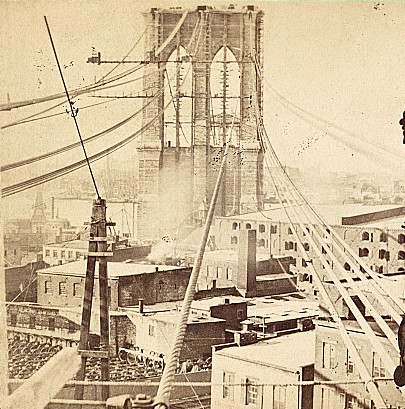
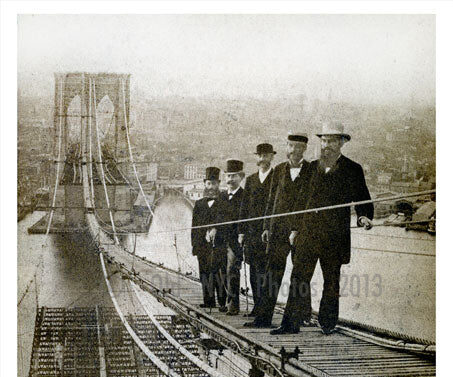
The tour begins with the people who helped shape the history of Brooklyn and New York: George Washington, Jackie Robinson, Walt Whitman, Henry Ward Beecher, and the extraordinary figures behind the Brooklyn Bridge. As you walk across the world-famous bridge, you will discover why it was considered one of the greatest engineering achievements of the 19th century. Its construction took nearly 14 years and involved danger, political struggle, technical brilliance, and personal sacrifice. You will also hear the remarkable story of Emily Warren Roebling, who helped guide the project after her husband, Washington Roebling, became seriously incapacitated.

Crossing the Brooklyn Bridge is unforgettable, but this tour goes far beyond the view. Once in Brooklyn, you will explore DUMBO, a neighborhood where old warehouses, factories, and cobblestone streets have been transformed into one of New York City’s most exciting cultural and creative districts. Today, DUMBO blends industrial history with modern design, technology, food, and art. Guests can even stop near Jacques Torres Chocolate, one of New York’s best-known chocolatiers.

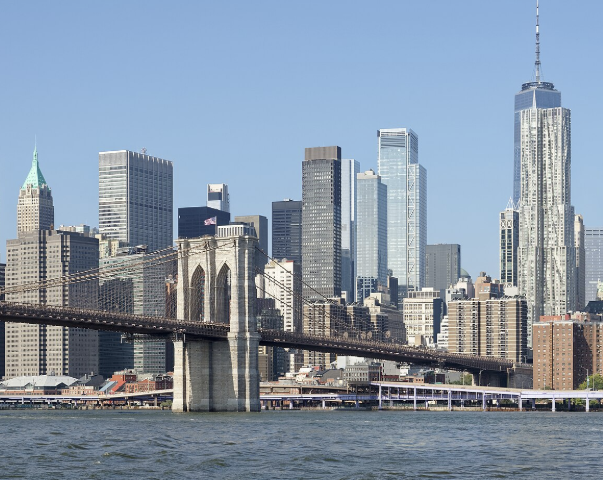
From there, the tour continues into Brooklyn Bridge Park, one of the most spectacular waterfront parks in NYC. With sweeping views of Lower Manhattan, the East River, and the Brooklyn Bridge, it is one of the most scenic places in New York for photography. You will also see Jane’s Carousel, a beautifully restored 1922 carousel enclosed in a striking glass pavilion.

But Brooklyn’s most dramatic story reaches back to 1776, during the Battle of Brooklyn, the largest battle of the American Revolution. After a devastating defeat, George Washington’s army escaped across the East River under cover of darkness and providential weather. That daring retreat helped save the American Revolution from possible collapse. On this Brooklyn history tour, you will stand near the waterfront where this extraordinary evacuation unfolded.

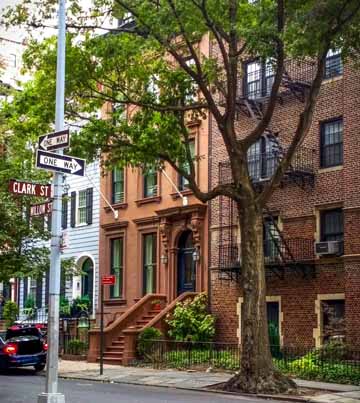
The tour then moves into elegant Brooklyn Heights, one of New York City’s most beautiful historic neighborhoods. Its tree-lined streets and 19th-century townhouses have been home to writers, artists, actors, reformers, and celebrities. You will see locations connected to Truman Capote, the classic film Moonstruck, and the neighborhood’s rich literary and architectural past.

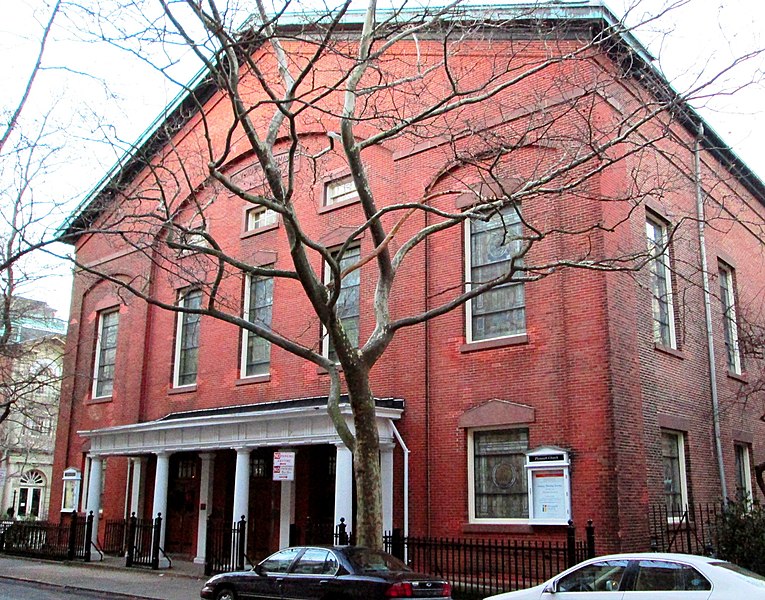
A major highlight is Plymouth Church, once led by the powerful abolitionist preacher Henry Ward Beecher. Known as an important center of anti-slavery activism, Plymouth Church was sometimes called the “Grand Central” of the Underground Railroad in the New York area. Abraham Lincoln visited the church before becoming president, adding another layer to Brooklyn’s national significance.

This is not a scripted sightseeing tour filled with trivia. It is a historian-led Brooklyn walking tour designed for curious travelers who want depth, storytelling, and unforgettable views. Whether you are interested in the Brooklyn Bridge, Revolutionary War New York, Brooklyn Heights architecture, DUMBO history, or simply want one of the best walking tours in NYC, this experience reveals why Brooklyn has always been a place of innovation, reinvention, and revolution.

Don’t just visit Brooklyn. Walk through the history that helped shape New York City and America. Sign up for the Best of Brooklyn Tour today!

The Remarkable Roeblings and the Making of the Brooklyn Bridge

Best-Brooklyn-Tour

The Remarkable Roeblings and the Making of the Brooklyn Bridge

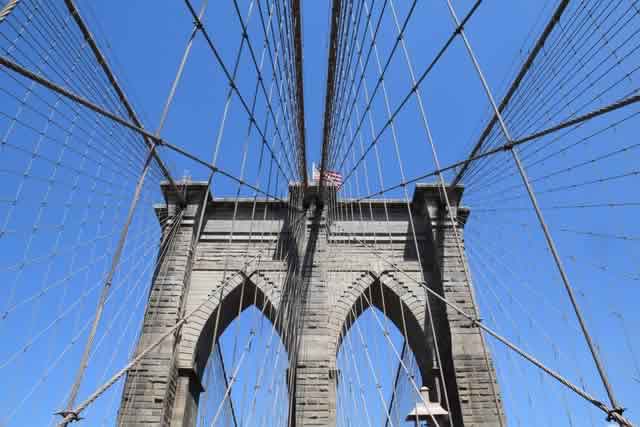
Few landmarks embody New York’s spirit of ambition and ingenuity like the Brooklyn Bridge. Completed in 1883, this engineering marvel linked Manhattan and Brooklyn for the first time, transforming both cities and shaping the destiny of the young nation. Behind this iconic achievement stood three extraordinary figures—John A. Roebling, Colonel Washington Roebling, and Emily Warren Roebling—whose combined brilliance, perseverance, and sacrifice made the impossible possible. Their story is a central highlight of our Best of Brooklyn/Brooklyn Revolution The Best of Brooklyn Walking Tour, where we explore how the fight for freedom, innovation, and identity continued long after the American Revolution.

John Roebling: The Visionary Engineer

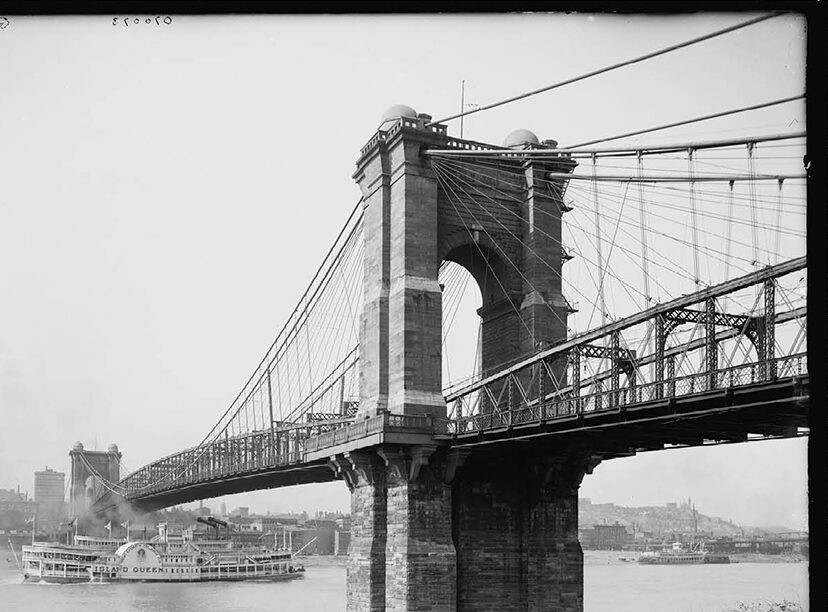
German-born engineer John A. Roebling was already renowned for his pioneering wire-rope suspension bridges, such as the Cincinnati-Covington Bridge, when he proposed a bold new project in the 1860s: a massive suspension bridge stretching across the East River. His design was revolutionary—using steel cables (a Roebling innovation) and Gothic stone towers that would become two of the nation’s most iconic architectural symbols. Roebling envisioned the bridge not just as a feat of engineering, but as a unifying civic triumph that would link the rapidly growing city of Brooklyn with the commercial powerhouse of Manhattan.

Tragically, Roebling never saw construction begin. A crushing accident on the Brooklyn pier led to his death in 1869. But his vision lived on through his son.

Washington Roebling: The Relentless Builder

Colonel Washington Roebling, trained by his father and battle-tested as a Civil War officer, took command of the project at the age of 32. Under his leadership, the team constructed the massive underwater caissons—giant wooden chambers pressurized with air—that allowed workers to dig the foundations of the bridge’s towers deep into the riverbed.

This work came at a tremendous cost. Many laborers suffered from “caisson’s disease,” but Washington himself became the most famous victim. The illness, now understood as decompression sickness, or “the bends,” left him partially paralyzed and confined to his Brooklyn Heights home. Conventional leadership became impossible. But the project did not stop.

Emily Roebling: The Bridge’s Unsung Hero

In stepped Emily Warren Roebling, whose role became legendary. Emily served as Washington’s eyes, ears, and voice on the construction site. She mastered the most complex engineering concepts, relayed her husband’s instructions, negotiated with politicians, and reassured skeptical investors. For over a decade, Emily became the indispensable link that kept the story of the Brooklyn Bridge alive.

When the bridge finally opened on May 24, 1883, Emily rode across it in a ceremonial carriage—the first person ever to cross the finished span.

Explore the Roeblings’ Legacy on the Brooklyn Revolution Tour

The story of the Brooklyn Bridge is about more than cables and towers; it’s about family, resilience, and the evolution of America’s ideals. On our Best of Brooklyn/Brooklyn Revolution Tour, we trace the neighborhood’s history from the Revolutionary era to the Roeblings’ soaring 19th-century achievement. You’ll stand near Washington Roebling’s residence, see key viewpoints of the bridge, and discover how Brooklyn’s spirit of innovation connects the fight for independence with the triumph of one of the world’s greatest engineering feats. You’ll also visit DUMBO, Brooklyn Heights, and Brooklyn Bridge Park with fantastic vistas and American history from the Revolutionary War to the Civil War and beyond. You’ll see New York City in a new way!

Join us and experience the Best of Brooklyn/Brooklyn Revolution Walking Tour.

Brooklyn’s Plymouth Church, Henry Ward Beecher, and Abraham Lincoln

Best Brooklyn Walking Tour

One of the stops on the Best of Brooklyn/Brooklyn Revolution Walking Tour is Plymouth Church. The National Historic Landmark church, along with its founding minister, the charismatic Henry Ward Beecher, had a long history of abolitionist activism from its inception in 1847 through the Civil War.  The Reverend Beecher’s arresting sermons were attended by the likes of Frederick Douglass and Sojourner Truth.  Douglass was engrossed as the impassioned Beecher “poured forth one continuous strain of eloquence for more than an hour,” even subduing “the miserable attempts at interruption” from opponents of his anti-slavery speech.[1]  Eventually aligning with the Republican party, Plymouth countered the prevailing Democratic political and social attitudes in Brooklyn and neighboring New York City.  They used the church basement as a stop on the Underground Railroad to shelter escaped slaves along their journey and advocated for manumission through sermons and journal articles.  Moreover, Plymouth and Beecher were influential in Lincoln’s breakthrough “Right Makes Might” speech at the Cooper Institute in New York City in February 1860, facilitating his subsequent rise to the presidency.[2]

Beecher’s most remarkable achievement during the Civil War was his advocacy for the Union cause in the United Kingdom.  In October 1863, through a series of five speeches given throughout Great Britain—and of his own accord—Beecher helped thwart the potentially devastating effects of Britain’s economic and military support of the Confederacy.  His provocative speeches to the laboring classes were both a rebuke of the British in their attempts to secure Southern cotton and a humanitarian plea to the British people to support the Union cause and American freedom.  Both the British and American press praised him for contributing to the Union victory.  Furthermore, near the end of the war, President Abraham Lincoln acknowledged the contribution of Beecher’s adroit and unofficial diplomacy.  When planning the rededication of Fort Sumter in South Carolina on April 14, 1865, a grateful Lincoln personally demanded that Beecher give the speech for the raising of the American flag, “because if it had not been for Beecher, there would have been no flag to raise.”[3] 


[1] Frederick Douglass, “Anniversary of the American and Foreign Anti-Slavery Society,” The North Star (Rochester, N.Y.), May 16, 1850, 2, Library of Congress, last accessed October 16, 2021, https://www.loc.gov/resource/sn84026365/1850-05-16/ed-1/?sp=2&r=0.39,0.026,0.447,0.186,0.

[2] Frank Decker, Brooklyn’s Plymouth Church in the Civil War: A Ministry of Freedom (Charleston: The History Press, 2013), 95-97.

[3] Emanuel Hertz, “Emanuel Hertz to William C. Beecher, December 10, 1926, Beecher Family Papers, Sterling Memorial Library, Yale University, New Haven.

Brooklyn Bridge Designer John Roebling’s Other Bridges

Best Brooklyn Bridge Tour

John Roebling the engineer and architect of the Brooklyn Bridge had already been a prominent designer of suspension bridges before his great bridge connecting the cities of New York and Brooklyn. He was also a manufacturer of twisted wire rope used for suspension bridges. His factory was based in Trenton, New Jersey. He designed the Niagra River Gorge Bridge in 1885, the Sixth Street Bridge in Pittsburgh, Pennsylvania in 1859, and the Covington-Cincinnati Bridge now known as the John A. Roebling Bridge Suspension Bridge in 1867, just two years before the Brooklyn Bridge started construction. That last bridge had been the longest suspension bridge in the world at 1057 feet for the main span before the Brooklyn Bridge was completed in 1883 with its main span at 1595.5 feet.

Roasting in Brooklyn

Best Brooklyn Tour DUMBO coffee

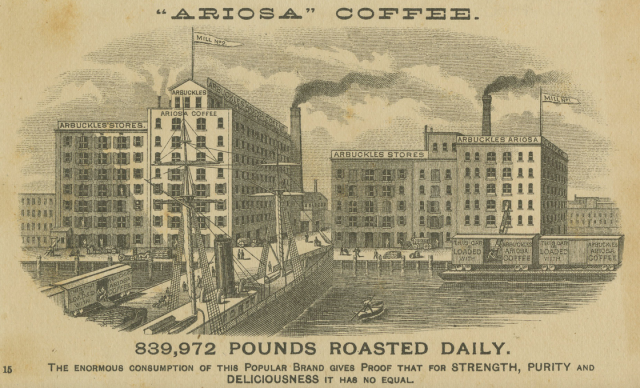
Not long after the Civil War, the brothers John and Charles Arbuckle, revolutionized and started a new industry in today’s DUMBO, Brooklyn, by offering roasted coffee to consumers in single pound packages. Before that, coffee beans were purchased green and roasted at home over a fire or in a wood stove; getting a consistent and palatable end product was challenging. The Arbuckle Brothers had such a popular product that they shipped their coffee throughout the country. Marketing their product under the Ariosa and Yuban brands, they were still going through the 20th Century…and the Yuban brand is still around even today. On the Brooklyn Revolution tour, we visit the amazingly renovated Empire Stores, the site and facility used by the Arbuckle Brothers to process their coffee until they sold it in the 1940s.

Walt Whitman’s Brooklyn

Best Brooklyn Walking Tour

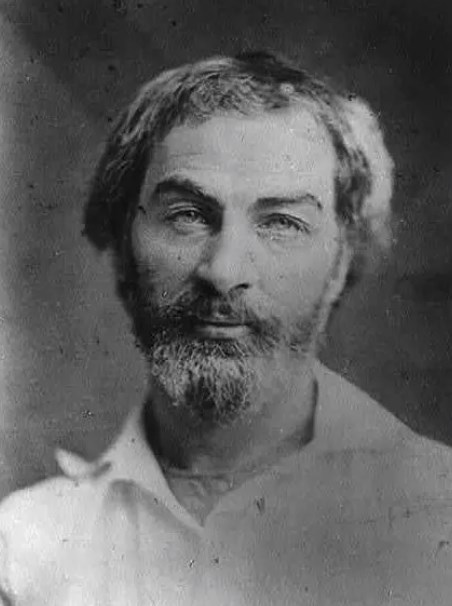
In 1862, Walt Whitman, resident of Brooklyn Heights wrote the following:

“Why then should not Brooklyn, in the experience of persons now living, become a city of a great million inhabitants? We have no doubt it will. We can not go over the list and description of our public institutions in this paper, although we intend to do so one of these days. We have not, in a modern city like Brooklyn, such marked specimens of magnificent architecture as the ancient or mediaeval cities presented, and many of whose ruins yet remain. For our architectural greatness consists in the hundreds and thousands of superb private dwellings, for the comfort and luxury of the great body of middle class people–a kind of architecture unknown until comparatively late times, and no where known to such an extent as in Brooklyn, and the other first class cities of the New World.”

Whitman was correct about the “great million inhabitants” that Brooklyn would achieve and the “greatness” of the architecture. See the houses he is referring to on the Brooklyn Revolution (aka Best of Brooklyn Tour)

Truman Capote’s Tribute to the Best of Brooklyn

Best Brooklyn Walking Tour Brooklyn Heights Brooklyn Bridge

Best Brooklyn Walking Tour Brooklyn Heights Brooklyn BridgeOn the Brooklyn Revolution walking tour, highlighting some of the best that Brooklyn has to offer, one of the most popular sites is the former home of Truman Capote, where he worked on two of his greatest works: “Breakfast at Tiffany’s” and “In Cold Blood.”  The house is on 70 Willow Street.  From 1955-1965, Capote rented space on the basement level from Oliver Smith, the famed Tony Award-winning Broadway scenic designer.  George Plimpton, who was a visitor, wrote that “when friends came to call, [Capote] often took them on a tour of the entire house (when Smith was not at home) and said it was his house, all his, and that he had restored and decorated every room.”  In February 1959, Capote penned “Brooklyn: A Personal Memoir” for “Holiday” travel magazine in which he begins:

I live in Brooklyn. By choice. Those ignorant of its allures are entitled to wonder why.

The entire article and photos taken at the time by David Attie of Capote, the house and the neighborhood are available in the book: “Brooklyn: A Personal Memoir, with the Lost Photographs of David Attie.”

The Great Woman Behind the Brooklyn Bridge

Brooklyn Bridge, Brooklyn Heights, DUMBO, Brooklyn Bridge Park Walking Tour

Brooklyn Bridge, Brooklyn Heights, DUMBO, Brooklyn Bridge Park Walking TourTruly, much of the credit for the completion of the Brooklyn Bridge under the stewardship of Washington Roebling, goes to his wife Emily Roebling.  After his illness caused by “caisson disease” or what we now know as the bends or decompression sickness and his inability to visit the bridge, Emily learned all that she needed about bridge construction and engineering to serve as Washington’s liaison with the assistant engineers on-site.  She explained Washington’s often complex directives and answered questions that they had.  In 1882, the year before the bridge was completed, Emily successfully defended her husband to the board of directors and politicians who wanted to strip him of his title as Chief Engineer.

There is a plaque on the Brooklyn tower of the Brooklyn Bridge dedicated to the memory of Emily Roebling “whose faith and courage helped her stricken husband…complete the construction of this bridge…Back of every great work we can find the self-sacrificing devotion of a woman”

Washington Roebling wrote: I thought I would succumb, but I had a strong tower to lean upon, my wife, a woman of infinite tact and wisest counsel.