



 917.475.6839
 May 21, 2026
  Tags:
Tags: 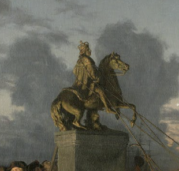
Long before the first shots of the Revolutionary War, New York City was already a center of colonial resistance. As a busy Atlantic port, commercial hub, and political meeting ground, New York felt the pressure of British imperial policy intensely. The Stamp Act crisis of 1765 made that clear. Delegates from nine colonies gathered in New York in solidarity at the Stamp Act Congress, one of the first coordinated intercolonial protests against Parliament’s claim to tax the colonies without their consent. Its resolutions insisted that colonists possessed the rights of Englishmen and could not be taxed without representation.
In the streets, resistance became more dramatic. New York’s Sons of Liberty, merchants, artisans, laborers, and ordinary residents pushed back against royal authority through protests, boycotts, and public demonstrations. Historian F. L. Engelman’s study of Cadwallader Colden and the New York Stamp Act riots shows how volatile New York became in 1765, as imperial policy collided with local fears about liberty, commerce, and political power.
By 1776, New York City had become one of the most strategically important places in North America. Whoever controlled New York controlled a deep-water harbor, access to the Hudson River, connections to the interior, and a base from which to divide New England from the rest of the colonies. George Washington understood the danger. After the British evacuated Boston, he shifted his attention to New York, writing Congress in April 1776 that he would exert himself to frustrate British designs.
That summer, New York became the stage for one of the Revolution’s most symbolic public moments. On July 6, 1776, John Hancock sent Washington the newly adopted Declaration of Independence and asked that it be proclaimed “at the Head of the Army.” Three days later, Washington’s general orders from headquarters in New York directed that the Declaration be read aloud to the assembled brigades at six o’clock in the evening.
The reaction was unforgettable. After hearing the Declaration, a crowd moved down Broadway to Bowling Green, where an equestrian statue of King George III had stood since 1770. It was a tribute to the king for winning the French & Indian War and repealing the Stamp Act in 1766. The statue, cast in lead and gilded, represented royal power at the southern tip of Manhattan. On July 9, 1776, New Yorkers and soldiers pulled it down. The Metropolitan Museum of Art notes that the fallen monument was later melted into bullets for the Patriot cause. Art historian Albert Boime and others have treated the event as political theater: not merely vandalism, but a symbolic rejection of monarchy in the very city that Britain most needed to control. Wendy Bellion’s and Albert Marks’s scholarship on Revolutionary iconoclasm places the destruction of royal imagery within a larger Atlantic-world language of political rupture.
Yet the triumph was short-lived. In August 1776, the British launched a massive campaign against New York. After the Battle of Long Island, the invasion of Manhattan, and Washington’s retreat, New York City fell under British occupation for seven years. Mount Vernon’s historical summary notes the scale of the British force and the beginning of occupation after the 1776 campaign, while also emphasizing the city’s complex wartime world of Loyalists, Patriots, enslaved people, refugees, soldiers, and black-market trade.
That is why the Revolutionary War in New York City matters so much. The city was not a side story. It was a military prize, a political battleground, a symbol of independence, and later the place where Washington returned in triumph after the British evacuation in 1783.
👉 To experience this history where it happened, join Revolutionary Tours NYC’s Washington & Hamilton: Secrets of the Past walking tour.
This historian-led New York City Revolutionary War tour explores Lower Manhattan, Bowling Green, Fraunces Tavern, Wall Street, Federal Hall, Trinity Church, and the streets where America’s fight for independence came alive. For travelers searching for the best historical tours in NYC, Revolutionary War tours in New York City, Hamilton tours in NYC, or walking tours of historic Lower Manhattan, this is the story behind the stones.


