
Category: Secret Central Park

Exploring Central Park’s Secret Northern End: Hidden History, Scenic Trails & Peaceful Escapes

Best Central Park Walking Tour

When most visitors think of Central Park, they picture Bethesda Terrace, the Bow Bridge, or the Great Lawn. Yet the park’s northern end — stretching from 100th Street to 110th Street — offers some of its most serene and spectacular landscapes, richest history, and least-crowded experiences. From the woodlands of the North Woods to the elegant Conservatory Garden and the historic forts of the Revolutionary War, this part of Central Park is a hidden gem that rewards those who venture beyond the familiar.

The North Woods: A Wilderness in Manhattan

At 40 acres, the North Woods is the largest of Central Park’s three woodlands, designed to evoke the feeling of the Adirondack forest. Winding paths, rustic bridges, and a serene stream known as the Loch make it a tranquil retreat right in the heart of Manhattan. Visitors can follow the Ravine Trail through dense oaks and maples, listening to waterfalls that flow from the Pool at 100th Street down to the Harlem Meer.

This area is a paradise for birdwatchers and photographers alike. You’ll find migrating warblers in spring, red-tailed hawks soaring above, and even the occasional heron fishing in the waters below. For locals and visitors seeking nature and solitude, the North Woods is one of the best-kept secrets of Central Park’s northern end.

The Conservatory Garden: Central Park’s Only Formal Garden

A short walk east of the North Woods, lies the Conservatory Garden — a masterpiece of landscape design and one of the park’s most peaceful places. You’ll find three distinct styles: the Italianate garden with its grand fountain and terraces, the French garden with seasonal tulips and the fountain of Three Dancing Maidens, and the English garden featuring a reflecting pool and lush perennials.

The fully-restored Conservatory Garden is an oasis of tranquility far from the park’s busier southern half. It’s also a favorite destination when flowers and foliage are at their peak. For anyone searching for romantic spots in Central Park or hidden gems in Upper Manhattan, this is a must-see.

Revolutionary Forts, History & Hidden Stories

Few visitors realize that the northern end of Central Park played an important defensive role in New York City’s Revolutionary War and War of 1812 history. The park’s high points — Fort Clinton, Fort Fish, and Nutter’s Battery — were part of a line of defensive fortifications built by American forces in 1814 during the War of 1812, on or near earlier Revolutionary War positions. The oldest original structure in the park is a Blockhouse from the War of 1812. The views of Harlem and the Bronx from its bluff are impressive.

Go Beyond the Map: Discover the Secret Places of Central Park

Want to uncover even more of Central Park’s hidden history, forgotten forts, and surprising stories? You’ll learn about Frederick Law Olmsted and Calvert Vaux’s vision for the first large-scale public park in the United States. You’ll also discover the fascinating pre-park history, including the Seneca Village community, an African American and immigrant community that preceded the park’s construction. Join Revolutionary Tours NYC for the acclaimed Secret Places of Central Park Tour — a deep dive into the park’s untold history, design secrets, and natural wonders. Led by a passionate historian, this immersive walking tour reveals areas most visitors never find on their own — from mysterious arches and hidden trails to sites where history was made.

Book your Secret Places of Central Park experience today at RevolutionaryToursNYC.com and see America’s greatest urban park in a whole new light.
Bethesda Terrace: The Heart of Central Park

Best NYC Central Park Tour

Nestled at the crossroads of Central Park’s most scenic landscapes, Bethesda Terrace stands as a testament to visionary design, artistic collaboration, and the enduring power of public space. More than just an architectural marvel, the Terrace is the symbolic and social heart of Central Park- a place where nature, art, and community converge in spectacular fashion.

A Vision for the People

The story of Bethesda Terrace begins with the ambitious vision of Frederick Law Olmsted and Calvert Vaux, the masterminds behind Central Park’s celebrated “Greensward Plan.” Their goal was revolutionary: create a park that offered city dwellers a restorative escape into nature, while also providing spaces for social interaction and cultural enrichment. Olmsted, a pioneer in landscape architecture, believed in the transformative power of green spaces for public health and social well-being. Vaux, the British-born architect, brought a keen sense of structure and artistry to the project, ensuring that architectural elements complemented the park’s naturalistic beauty.

Bethesda Terrace was conceived as the park’s main gathering place, where visitors from all walks of life could mingle, relax, and enjoy the restorative qualities of their surroundings. The Terrace’s strategic placement at the end of the Mall, Central Park’s only straight promenade, was designed to be the culmination of the park’s primary formal space.

Design: Nature First, Architecture Second

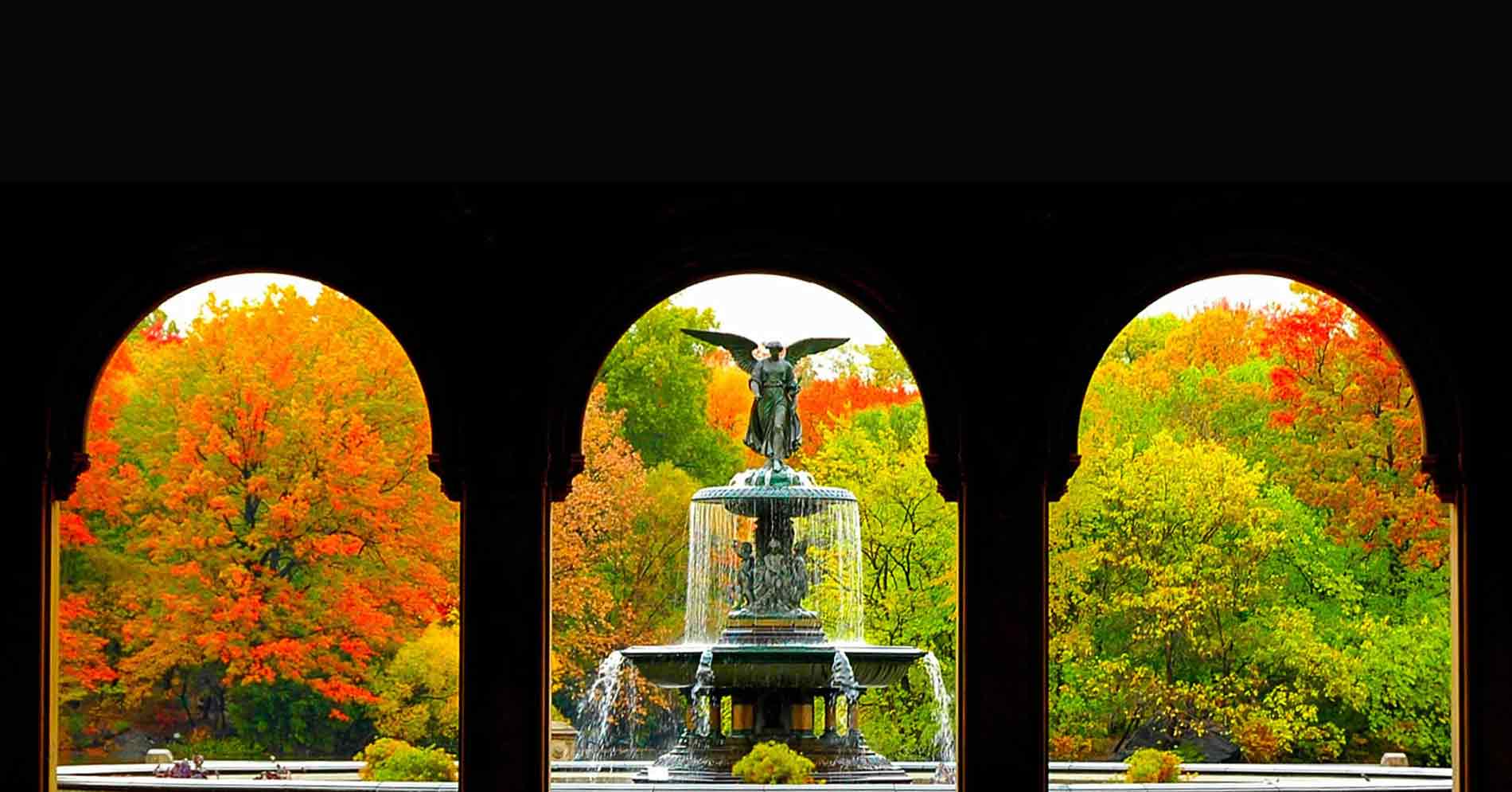
Construction of Bethesda Terrace began in 1859, making it one of the park’s earliest and most significant structures. The Terrace is a two-level complex: the upper level, flanked by 72nd Street, offers sweeping views of the Lake and the Ramble in the background, while the lower plaza, known as the Esplanade, centers on the iconic Bethesda Fountain.

The design is a masterclass in blending architecture and nature. Vaux insisted that the built elements should be “subordinate to the surrounding landscape,” a philosophy that shines through in every detail. The materials, such as New Brunswick sandstone, Roman brick, and granite, were chosen for their earthy hues and durability. The two grand staircases, along with a smaller one leading directly to the Mall, connect the levels in a way that feels both monumental and inviting.

Artistry in Stone and Tile: The Role of Jacob Wrey Mould

While Olmsted and Vaux established the vision, it was Jacob Wrey Mould who brought the Terrace’s decorative elements to life. Mould, an English-born architect and designer, infused the space with intricate carvings and vibrant colors. The balustrades feature sculpted motifs representing the four seasons, such as lambs for spring, butterflies and berries for summer, holly and pine cones for fall, and firewood for winter. These are alongside whimsical touches like ice skates and even a witch on a broomstick.

Perhaps the most breathtaking feature is the arcade’s ceiling, adorned with around 16,000 elaborate Minton encaustic tiles. This polychrome masterpiece is the only place in the world where these tiles are used on a ceiling and outdoors, creating a kaleidoscope of color and pattern that dazzles the visitor as they pass through the cool, echoing hall. Mould’s work here is considered his crowning achievement, marrying Victorian and Moorish exuberance with themes of nature, art, and science.

Highlights and Enduring Appeal

Bethesda Terrace is not just an architectural gem, it is a living, breathing stage for New York life. The site offers panoramic views, which attract artists and performers, and is a favorite backdrop for so many movies. The Angel of the Waters statue atop Bethesda Fountain, designed by Emma Stebbins and dedicated in 1873, adds a spiritual dimension, symbolizing healing power of water.

Today, whether you’re seeking a quiet moment by the Lake, a lively crowd to observe, or a glimpse into New York’s rich cultural tapestry, Bethesda Terrace delivers. It is Olmsted and Vaux’s vision realized: a place where nature and humanity meet, and where every visitor becomes part of the park’s unfolding story.

Find the Central Park Experience and other New York Historical tours at Revolutionary Tours NYC

Manhattan Serenity: Central Park’s Secret Woodland

Best Central Park Tour

On the Secret Places of Central Park tour, you’ll the enchanting North Woods, a 40-acre woodland oasis that will transport you to a tranquil environment reminiscent of the Adirondack Mountains. This serene escape offers “natural” beauty and carefully crafted landscapes, designed by Frederick Law Olmsted and Calvert Vaux that evoke a sense of wilderness and wonder in the heart of Manhattan.

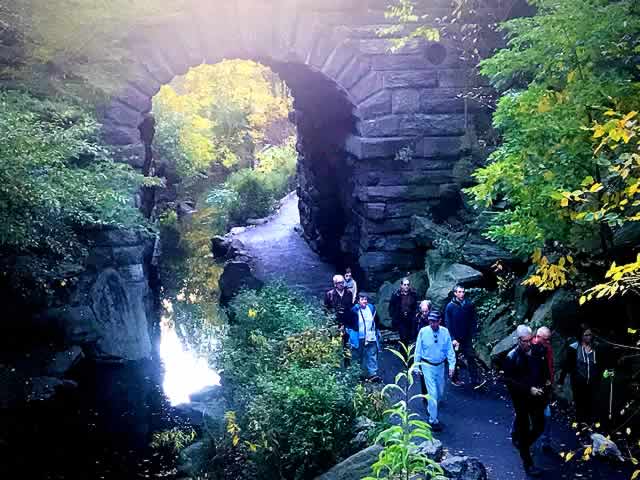
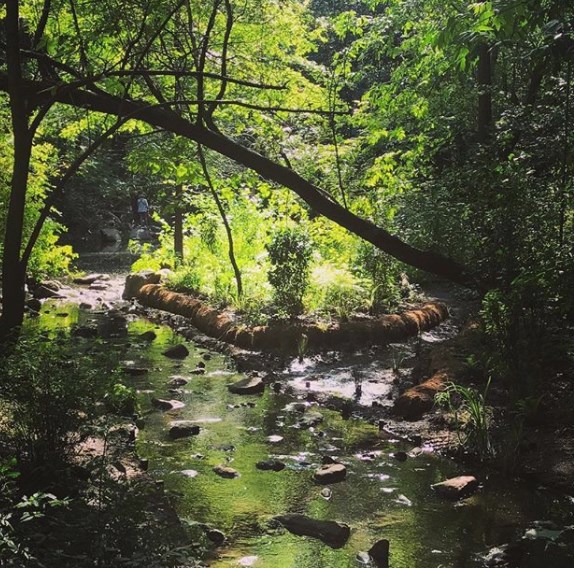
As we wander through the winding paths, the sounds and sights of the city fade away, replaced by the soothing melody of the Cascade waterfall. The Ravine, with its picturesque stream known as the Loch, is a highlight, featuring a number of manmade wooden bridges beneath a canopy of trees.  You’ll be surrounded by lush greenery and as you roam past the engineering feats of spectacular stone bridges.  The scenery and romantic ambiance enhance the peaceful stroll that clear or “unbend” the mind.

The North Woods also boasts the historic landmark of the majestic Blockhouse, a remnant from the War of 1812.   Whether you’re a nature lover, a history buff, or simply seeking a tranquil retreat, the North Woods is a must-visit destination in Central Park. Come and discover its beauty, serenity, and magic on the Secret Places of Central Park tour.  Book the tour today!