
Category: Best Hamilton Tour

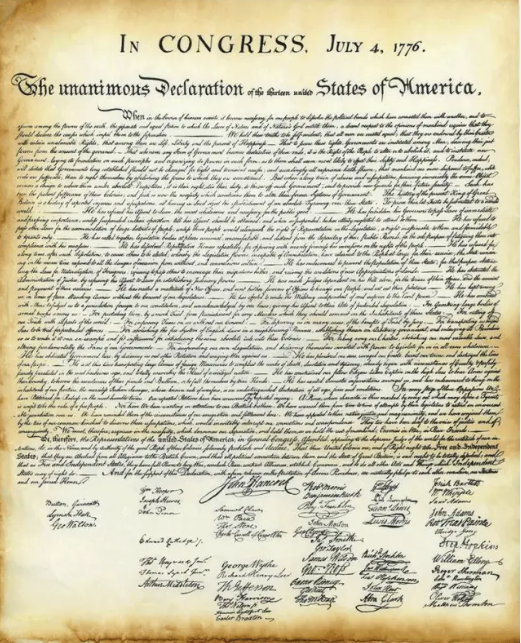
Why Does the Declaration of Independence Say “Unanimous” If New York Didn’t Approve It Until July 9?

Best New York City Revolutionary Walking Tour

Every July, Americans celebrate the “unanimous” Declaration of Independence adopted on July 4, 1776. But there’s a fascinating wrinkle hiding behind that famous word: on July 4, the vote wasn’t actually unanimous. New York — a critical colony and future major battleground of the Revolution — had not authorized its delegates to support independence. So why does the document proudly proclaim “the unanimous Declaration of the thirteen united States of America”? The answer reveals the messy, human reality behind one of the nation’s most important moments.

To understand this, we need to step back a couple of days before July 4. On July 2, 1776, the Continental Congress voted on Richard Henry Lee’s resolution declaring the colonies independent from Great Britain. Twelve colonies voted in favor. New York abstained — not because its delegates were loyal to the Crown, but because they were bound by instructions from their Provincial Congress, which had not yet authorized a vote for independence. In an era when delegates followed strict legal instructions from their home governments, they simply could not say yes on their own authority.

Two days later, on July 4, Congress approved the final wording of the Declaration of Independence. New York again refrained from voting. Yet importantly, the colony did not oppose the Declaration either. The delegates understood the direction events were moving — they were simply waiting for official approval from home.

That approval arrived on July 9, 1776, when New York’s Provincial Congress met in White Plains and finally endorsed independence. With that decision, New York’s delegates were free to join their colleagues. In the weeks that followed, as the Declaration was printed, circulated, and eventually engrossed for signing in August, all thirteen states had formally aligned themselves with the revolutionary cause. By the time most delegates signed the famous parchment on August 2, the colonies truly were united — making the description “unanimous” politically accurate, even if it wasn’t technically true on July 4 itself.

New York’s hesitation reflects the colony’s unique position in 1776. Economically tied to Britain, politically divided, and strategically vulnerable, New York faced enormous risks. British forces were already preparing to target the city, and many residents were cautious about a complete break with the empire. Understanding this context adds depth to the story of independence and reminds us that unity was achieved through a process — not a single dramatic moment.

This nuance is just one example of how Revolutionary-era history is often more complex and compelling than what we learned in school. On Revolutionary Tours NYC’s Hamilton & Washington walking tour, visitors explore the real-life settings where New York wrestled with loyalty, resistance, and ultimately revolution. From Federal Hall to Fraunces Tavern and beyond, the tour reveals how figures like Alexander Hamilton and George Washington navigated the uncertain days when independence was far from guaranteed.

So the next time you read the Declaration’s opening line, remember that “unanimous” reflects the final unity the colonies achieved — not the perfectly synchronized vote we often imagine. The road to independence was uneven, cautious, and deeply human — and New York’s late but decisive support is a powerful reminder that the Revolution was built step by step, colony by colony, until a shared vision finally emerged.
👉 Sign up today for the Hamilton & Washington Walking Tour and experience the American Revolution where it happened.

The Perfect New York City Tour for America’s 250th: Washington, Hamilton, and the Revolutionary City

250th Revolutionary Tour New York City

This year, the United States marks its 250th anniversary—the Semiquincentennial—an opportunity to reflect on how a fragile rebellion became a nation. There is no better place to experience that story than New York City, and no better way to encounter it than on the Hamilton & Washington: Secrets of the Past Walking Tour.

New York was not merely a backdrop to the American Revolution—it was one of its central stages. Long before the Declaration of Independence was read aloud in July 1776, New Yorkers were already locked in struggle over liberty, power, and the future of empire. During the Revolution, the city witnessed dramatic protest, crushing defeat, daring escapes, espionage, and—ultimately—the birth of the United States itself. Our Washington & Hamilton tour places you directly on those streets, where history unfolded step by step.

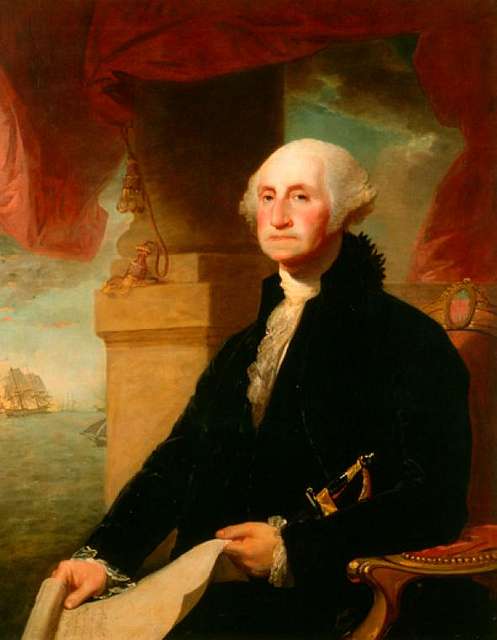
This immersive walking tour explores the Revolution and the early republic through the intertwined lives of George Washington and Alexander Hamilton—two indispensable figures who shaped America’s destiny. Washington, the steadfast Commander-in-Chief and first President, guided the nation through war and into republican government. Hamilton, an orphaned immigrant with towering ambition, helped design the financial and constitutional foundations that allowed the United States to survive. Their partnership—and their tensions—define the Revolutionary era.

As the nation commemorates its 250th anniversary, this tour offers something deeper than monuments and dates. You will encounter the Revolution as lived experience: the Sons of Liberty resisting British taxation, the devastating consequences of the Battle of Brooklyn, Washington’s providential nighttime escape across the East River, and his emotional farewell to the Continental Army at a Manhattan tavern. You’ll stand near the site of Washington’s triumphant inauguration on Wall Street and explore how Hamilton’s economic vision reshaped the future of the nation.

Importantly, the Semiquincentennial demands a fuller story—and this tour delivers it. Alongside Washington and Hamilton, you’ll meet African Americans who fought for freedom, women who sustained the Patriot cause, and lesser-known figures whose contributions were vital to independence. You’ll learn how intelligence networks like the Culper Spy Ring helped save the Revolution, and how ideas expressed in the Federalist Papers secured ratification of the Constitution.

For visitors inspired by Hamilton on Broadway, this tour provides historical depth behind the drama—grounded in scholarship, primary sources, and place-based storytelling. For lifelong history enthusiasts, it offers rare insight into New York’s Revolutionary past. And for the 250th anniversary, it provides something essential: context, complexity, and connection.

As America reflects on its founding at 250 years, join us to walk the city where independence was contested, nearly lost, and ultimately secured. The Semiquincentennial deserves more than a celebration—it deserves understanding.
👉 Sign up today for the Hamilton & Washington Walking Tour and experience the American Revolution where it happened.

Alexander Hamilton and John Laurens: Brotherhood, Ideals, and the Revolutionary War

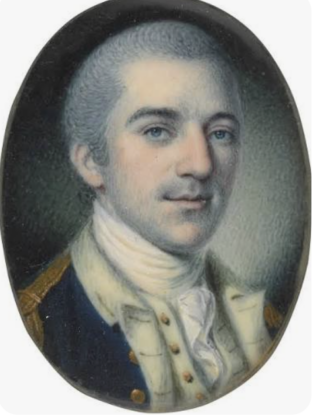
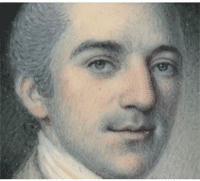
John Laurens, Alexander Hamilton

Few friendships of the American Revolution were as intense, idealistic, and emotionally resonant as that between Alexander Hamilton and John Laurens. Forged in wartime and sustained through passionate correspondence, their bond was built on shared values, military ambition, and a belief that the Revolution should live up to its bold promises. Their letters reveal not only political thinking, but an emotional intimacy that still surprises modern readers—and helps explain why their friendship features so prominently in Hamilton the musical.

Hamilton and Laurens met in 1777 while serving as aides-de-camp to George Washington. Both were young, brilliant, and impatient with half-measures. In their letters, they wrote about honor, reputation, and the meaning of liberty, often blending political philosophy with personal affection. Hamilton once wrote candidly to Laurens:

“Cold in my professions, warm in my friendships, I wish it were in my power to tell you how much I love you.”¹

While such language was not unheard of among 18th-century gentlemen, the frequency and depth of their correspondence suggest an unusually close bond. Laurens was a confidant—someone Hamilton trusted with his frustrations, ambitions, and moral convictions.

Shared Ideals and Revolutionary Purpose

What truly united Hamilton and Laurens was a shared vision of what the Revolution should achieve. Laurens was among the most outspoken abolitionists of his generation, advocating the enlistment and emancipation of enslaved men in South Carolina. Hamilton strongly supported the idea, writing:

“I wish, my dear Laurens, it might be in my power… to convince Congress to adopt your plan.”²

Their alignment on slavery—radical for the era—reveals how both men believed independence meant more than separation from Britain.

Brothers in Arms

Hamilton and Laurens were also brothers in uniform, bound by danger and ambition. They belonged to Washington’s inner military “family,” alongside figures like the Marquis de Lafayette. They wrote often about glory, risk, and the frustrations of staff duty. Hamilton once worried that Laurens was “too fond of glory,” a concern that reflected his own willingness to court danger.³

Loss and Legacy

Laurens’ death in 1782—killed in a minor skirmish after the war was effectively over—devastated Hamilton. Writing to General Nathanael Greene, Hamilton mourned:

“Poor Laurens! He has fallen in a paltry skirmish… The world will feel the loss of a man who has left few equals behind him.”⁴

The grief was lasting. Laurens’ death came just as the ideals he fought for seemed within reach, leaving Hamilton—and the new nation—to carry on without him.

Hamilton the musical captures the energy of this friendship—its urgency, idealism, and tragedy—even if it compresses the history. In life, Hamilton and Laurens believed the Revolution could remake the world. In death, Laurens became one of the sacrifices that made that vision possible.

On the Hamilton & Washington in New York walking tour, their friendship is explored as a window into a younger, more radical generation within Washington’s army—men who debated liberty late into the night, challenged each other’s assumptions, and imagined an America that did not yet exist. Standing in the very places where Hamilton later shaped the nation, visitors are invited to consider how much of his vision was forged not only in battle, but in friendship.


  1. Alexander Hamilton to John Laurens, April 28, 1778, Founders Online, National Archives, https://founders.archives.gov/documents/Hamilton/01-01-02-0064.
  2. Alexander Hamilton to John Laurens, March 14, 1779, Founders Online, National Archives, https://founders.archives.gov/documents/Hamilton/01-02-02-0245.
  3. Alexander Hamilton to John Laurens, June 1779, Founders Online, National Archives, https://founders.archives.gov/documents/Hamilton/01-02-02-0270.
  4. (Note: Some June 1779 letters are undated or partially dated; this citation reflects standard archival usage.)
  5. Alexander Hamilton to Nathanael Greene, January 26, 1783, Founders Online, National Archives, https://founders.archives.gov/documents/Hamilton/01-03-02-0204.

“A Most Critical Comma”: Hamilton, Angelica, and Their Flirty and Witty Correspondence

NYC Hamilton Tour

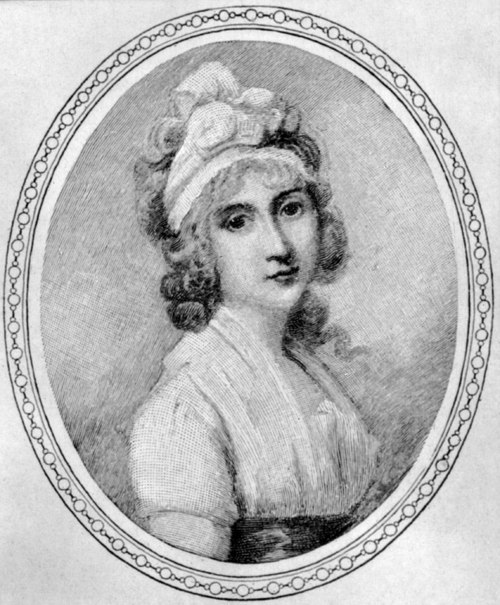
The surviving letters between Alexander Hamilton and his sister‑in‑law, Angelica Schuyler Church, offer a tantalizing glimpse into a relationship that—though publicly familial—was steeped in warmth, wit, and an emotional intimacy that has fascinated historians and the public alike. . . and informed the song “Satisfied” in the Hamilton musical. While some of their exchanges were clever and even flirtatious, the release of the “Reynolds Pamphlet” in 1797 seems to have altered the dynamic irrevocably.

From one of their more famous exchanges, written 6 December 1787, Hamilton wrote to Angelica:

“You ladies despise the pedantry of punctuation. There was a most critical comma in your last letter. It is my interest that it should have been designed; but I presume it was accidental. Unriddle this if you can. The proof that you do it rightly may be given by the omission or repetition of the same mistake in your next.” (1)

That playful reference to punctuation—a “most critical comma”—caught the public imagination thanks to modern dramatic retellings of their story. But the real letters show a more ambiguous tone. Hamilton closes that letter, after complimenting her and her husband, with a warm: “Adieu ma chere, soeur” — “my dear sister.” (2)

Angelica’s side of the correspondence shows similar intimacy. In a letter from 2 October 1787, writing from London, she confessed to some melancholy and longing for home:

“Indeed my dear, Sir if my path was strewed with as many roses, as you have filled your letter with compliments, I should not now lament my absence from America … but even Hope is weary…” (3)

The comma after “my dear,” rather than “my dear Sir,” is what appears to have triggered Hamilton’s response.

And, expressing how much she missed his company, she told him in a letter dated 4 February 1790:

“I regret America, I regret the separation from my friends and I lament the loss of your society… I cannot now relish the gay world.” (4)

Such phrasing — “loss of your society,” “lament”—suggests an intimacy beyond casual family courtesy. Hamilton wrote to her in 1787, “I seldom write to a lady without fancying the relation of lover and mistress.”  In his letters, Hamilton referred to the “relation of lover and mistress” in a playful way, showing the suggestive undertones of their exchanges. 

Given the constraints and social norms of their time, that admission stands out. But whether their affection went beyond the verbally remains a matter of speculation.

That ambiguity became sharpened after the scandal. The Reynolds Pamphlet, published by Hamilton in 1797, publicly disclosed his affair with Maria Reynolds and financial dealings with her husband — a decision that forever destabilized his private and public life.

Although none of Angelica’s known surviving letters explicitly address the affair or the pamphlet, the tone of their later correspondence noticeably cools. After 1789–1790, her letters tend to refer to him as “dear friend” or “dear Brother,” rarely revisit the playful punctuation banter, and emphasize familial duty.

In historical retrospect, this shifting tone suggests that the scandal may have introduced restraint and distance.  Previously, the tone of their correspondence had been undeniably flirtatious, but it remains unclear whether that teasing warmth hinted at genuine romantic feeling or simply reflected their shared wit and charm.

1. Alexander Hamilton to Angelica Church, December 6, 1787, Founders Online, National Archives, https://founders.archives.gov/documents/Hamilton/01-04-02-0172.

2. Ibid.

3. Angelica Church to Alexander Hamilton, October 2, 1787, Founders Online, National Archives, https://founders.archives.gov/documents/Hamilton/01-04-02-0144.

4. Angelica Church to Alexander Hamilton, February 4, 1790, Founders Online, National Archives, https://founders.archives.gov/documents/Hamilton/01-06-02-0127.

The Hamilton & Burr Duel Letters

Best Hamilton Tour in New York City

The duel between Aaron Burr and Alexander Hamilton on July 11, 1804 was one of the most infamous events in American history, rooted in fierce political rivalry and personal animosity. Their conflict erupted after a contentious New York gubernatorial race, where Burr, then Vice President, lost to Morgan Lewis, partly due to Hamilton’s vocal opposition to his candidacy. The final catalyst for the duel came when a letter from Dr. Charles D. Cooper, published in the Albany Register, accused Hamilton of describing Burr as an untrustworthy “dangerous man,” and of having expressed “a still more despicable opinion” of Burr.

The Cooper Letter in the Albany Register

Dr. Cooper’s letter read:

“I assert that Gen. Hamilton and Judge Kent have declared, in substance, that they looked upon Mr. Burr to be a dangerous man, and one who ought not to be trusted with the reins of government.” (1)

Cooper further reported Hamilton’s supposed utterance of an even worse “despicable” opinion, which triggered Burr to confront Hamilton directly. This public airing of private resentments created a scandal Burr felt demanded satisfaction.

Burr’s Letters to Hamilton

Upon seeing Cooper’s published remarks, Burr sent his first challenge letter to Hamilton on June 18, 1804:

“You must perceive, sir, the necessity of a prompt and unqualified acknowledgement or denial of the use of any expression that would warrant the assertions of Dr. Cooper.” (2)

Burr demanded Hamilton either confirm or deny he made the statements attributed to him. Hamilton’s reply was evasive, refusing a categorical answer, which inflamed the conflict. Burr followed up with another letter dated June 22:

“I relied with unsuspecting faith that from the frankness of a Soldier and the Candor of a gentleman I might expect an ingenuous declaration; that if, as I had reason to believe, you had used expressions derogatory to my honor, you would have had the Spirit to Maintain or the Magnanimity to retract them…” (3)

Burr made clear that only an explicit apology or retraction would suffice, expressing disappointment at what he saw as Hamilton’s equivocation.

Hamilton’s Responses

Hamilton’s replies were measured but firm. In his June 20, 1804 letter, Hamilton rebuffed Burr’s demand:

“I have become convinced, that I could not, without manifest impropriety, make the avowal or disavowal which you seem to think necessary.” (4)

Hamilton further explained that his statements about Burr were general political criticisms and not a direct attack on Burr’s honor. He conceded to “abide by the consequences,” implicitly accepting the possibility of a duel. Throughout these exchanges, Hamilton maintained a tone of civility and principle, while trying to avoid a public retraction and escalation, but Burr saw this as evasion.

The Path to the Duel

The repeated written refusals to apologize and escalating tone brought both men to an impasse. Burr closed his final letter:

“Thus, sir, you have invited the course I am about to pursue, and now your silence impose it upon me.” (5)

Hamilton, meanwhile, prepared drafts in case he would not survive, expressing his moral aversion to dueling but accepting the practical realities of honor and reputation in that era.

These exchanges show how the collision of politics and pride produced one of America’s defining moments, ending in Hamilton’s early demise and reshaping the early republic’s view of honor and violence.

The unfortunate conclusion of the Burr–Hamilton duel reveals a profound complexity at the heart of their relationship, shaped by fifteen years of political rivalry, deep-seated mistrust, and competing ambitions for influence in the new nation. Though both men had worked together in law and served in the American Revolution, their differences became irreconcilable as Burr’s flexible political allegiances repeatedly clashed with Hamilton’s principled Federalism, leading Hamilton to view Burr as an obstacle to the country’s future. Hamilton’s letter before the duel admitted no personal hatred, but emphasized his duty to oppose Burr for the greater good.

For both Hamilton and Burr, the concept of honor was not merely personal character, but a public currency essential for survival in the Early Republic. Burr’s demand for a full retraction was rooted in the era’s sometimes unforgiving standards, where reputation dictated power; refusing the challenge would have meant public humiliation and hence political death for either man. Hamilton, meanwhile, struggled with the moral consequences of dueling but understood that conceding would compromise his usefulness and legacy as a leader.  Ultimately, their ideas of honor forced them onto the dueling ground—not out of animosity alone, but from a belief that only through defending reputation could they uphold their dominance, even at ultimate personal cost. The heartbreak was not just in the loss of Hamilton’s life, but in the way their fixation on personal honor transformed a private quarrel into a moment that transformed early American political culture.

Explore Alexander Hamilton and Aaron Burr in the Hamilton & Washington in New York walking tour, offered as both a public and private tour. Book the tour today!

Sources:

  1. Founders Online: Enclosure: Charles D. Cooper to Philip Schuyler, April 23, 1804
  2. The June 18 Letter – Hamilton’s Choice
  3. Aaron Burr Challenges Alexander Hamilton, 1804 | Gilder Lehrman
  4. Hamilton-Burr Duel (U.S. National Park Service)
  5. Aaron Burr Challenges Alexander Hamilton, 1804 | Gilder Lehrman

Unity in Leadership: Washington’s 1783 Letter to Hamilton

Best Hamilton Tour in NYC

In March 1783, as the Revolutionary War drew to a close, George Washington drafted a letter from Newburgh, New York to his trusted associate Alexander Hamilton that revealed the depth of his vision for the newly independent United States. This letter reflects not only Washington’s happiness at the close of the war but also his concerns and vision for the future of the United States.

Unity

Washington’s letter reveals his optimism about the potential of the new nation to become “a great, respectable, and happy People” but also his awareness that realizing this vision would require more than just the end of the long conflict with England. Internal divisions, petty politics, and “unreasonable jealousies & prejudices,” he understood, could undermine the nation’s progress, making it vulnerable to foreign powers seeking to dissolve the government running under the Articles of Confederation through intervention.

Washington’s words serve as a powerful reminder of the importance of unity and cooperation in achieving greatness. He understood that the path to success was about building a strong, cohesive society where all citizens could thrive.

Reform

One of the most striking aspects of Washington’s letter is his prescience in his candid assessment of the defects in the existing Confederation and the need for reform and and a nation built upon “liberal & permanent principles.” He understood that many of the war’s challenges, including its prolongation and expense, were due to the lack of power vested in Congress. This insight highlights Washington’s foresight in recognizing the need for a more robust central government, a vision that he and Alexander Hamilton shared that would later shape the creation of the U.S. Constitution.

Washington’s call for reform was not simply intellectual; it was deeply personal. He had experienced firsthand the difficulties caused by a weak Congress during the war. The letter reveals his frustration with the “prejudices of some” and the “designs of others,” which made it challenging to implement needed reforms

Collaboration

What makes Washington’s letter truly remarkable is his willingness to collaborate and seek advice. He eagerly awaited Hamilton’s thoughts on these matters, demonstrating the value he placed on other perspectives. This approach to governance is still essential today, as leaders must navigate complex challenges and, for the betterment of the nation, engage with different viewpoints.

Lessons

Washington’s letter offers wisdom that resonates deeply in today’s divisive political landscape. His emphasis on unity, principled governance, and visionary leadership is a powerful reminder of how to build a strong and prosperous nation.

In an era marked by polarization, Washington’s words remind us of the importance of putting aside our differences and working towards common national goals. His call for a robust and effective government structure is a reminder that systemic issues must be addressed to ensure the well-being of all citizens.

Conclusion

George Washington’s letter to Alexander Hamilton is a blueprint for building a better future. It reminds us that the strength of a nation lies in its ability to unite, reform, and lead with vision and integrity. As we navigate the complexities of today, Washington’s letter stands as a testament to the enduring power of unity, collaboration, and principled leadership.

You can experience more about Washington & Hamilton’s visionary partnership on the Washington & Hamilton in New York Walking tour. Book it Today!

Here is the complete letter:

From George Washington to Alexander Hamilton, 31 March 1783

Newburgh 31st March 1783

Dear Sir,

I have duly received your favors of the 17th & 24 Ulto—I rejoice most exceedingly that there is an end to our Warfare, and that such a field is opening to our view as will, with wisdom to direct the cultivation of it, make us a great, a respectable, and happy People; but it must be improved by other means than state politics, and unreasonable jealousies & prejudices; or (it requires not the second sight to see that) we shall be instruments in the hands of our Enemies, & those European powers who May be jealous of our greatness, in Union to dissolve the confederation—but to attain this, altho’ the way seems extremely plain, is not so easy.

My wish to see the Union of these States established upon liberal & permanent principles—& inclination to contribute my mite in pointing out the defects of the present Constitution, are equally great—All my private letters have teemed with these Sentiments, & whenever this topic has been the Subject of conversation, I have endeavoured to diffuse &enforce them; but how far any further essay, by me, might be productive of the wished for end–or– appear to arrogate more than belongs to me, depends so much upon popular opinions & the temper and disposition of People, that it is not easy to decide. I shall be obliged to you however for the thoughts which you have promised me on this Subject, and as soon as you can make it convenient.

No Man in the United States is, or can be more deeply impressed with the necessity of a reform in our present Confederation than myself—No Man perhaps has felt the bad efects of it more sensibly; for to the defects thereof, & want of Powers in Congress may justly be ascribed the prolongation of the War, & consequently the Expences occasioned by it. More than half the perplexities I have experienced in the course of My command, and almost the whole of the difficulties & distress of, the Army, have there origin here; but still, the prejudices of some—the designs of others—and the mere Machinery of the Majority, makes address & management necessary to give weight to opinions which are to Combat the doctrines of these diferent classes of Men, in the field of Politics.

I would have been more full on this subject but the bearer (in the Clothing department) is waiting—I wish you may understand what I have written. I am Dr Sir Yr Most Obed Servt

Go: Washington

P.S. The inclosed extract of a Letter to Mr Livingston, I give you in confidence—I submit it to your consideration, fully perswaded that you do not want inclination to gratify the Marquis’s wishes as far as is consistent with our National honor. (1)

1 George Washington to Alexander Hamilton, 31 March 1783, Founders Online, National Archives, accessed March 27, 2025, https://founders.archives.gov/documents/Washington/99-01-02-10968.

Find the Washington & Hamilton in New York tour and other New York Historical Tours at Revolutionary Tours NYC

America’s 250th Anniversary, the Semiquincentennial in New York City

Celebrate America's 250th - Semiquincentennial in New York City

As we approach the United States’ Semiquincentennial in 2026, marking 250 years since the birth of our nation, it’s fitting to reflect on New York City’s pivotal role in the American Revolution and the Early Republic. Today’s bustling metropolis was once a crucible and battleground where the fate of the nascent nation hung in the balance and after the war, the first capital city.

In the summer of 1776, New York became the center stage for one of the Revolution’s most crucial campaigns. General George Washington, recognizing the city’s strategic importance, fortified it against British attack. Despite his efforts, the New York Campaign proved to be one of the lowest points of his military career. The little-known Battle of Brooklyn in August 1776 saw the Continental Army suffer a crushing defeat. Yet, in a daring nighttime maneuver Washington saved the army and the revolutionary cause.

While the British held New York for the longest occupation of the war, the city’s revolutionary spirit persisted. It was here that Alexander Hamilton, a young immigrant artillery officer, caught the attention of the military and began his ascent to Founding Father. It was here that Washington bade farewell to his officers and generals, and it was here that he took the oath as the nation’s first president.

As we look forward to the Semiquincentennial celebrations, New York’s revolutionary history reminds us of the courage and perseverance that birthed our nation by men and women and Black and white. On the Washington & Hamilton in New York tour, you’ll discover the historic streets of Lower Manhattan that still echoes with the footsteps of those who fought for independence and created a new nation. The immersive tour will entertain and educate through historic sites, storytelling, and images as we reflect on the past and gain greater insights into the present. Book the tour today!

George Washington’s Real Right Hand Man

George Washington and William Lee

While some may consider Alexander Hamilton George Washington’s “Right Hand Man,” the more compelling choice is William Lee, the African American enslaved valet who served Washington for approximately twenty years, including over seven years of the Revolutionary War. (1) From helping the command-in-chief arrange his personal business, to delivering dispatches, to assisting with sartorial tasks, to accompanying Washington on fox hunts, Lee was the ever-present assistant. (1)

In the 1780s, Lee suffered a number of falls that affected his knees. Washington noted in his diary, April 22, 1785, “My Servant William (one of the Chain Carriers) fell, and broke the pan of his knee wch. put a stop to my Surveying; & with much difficulty I was able to get him to Abingdon, being obliged to get a sled to carry him on, as he could neither Walk, stand, or ride. . . ” (2) When Washington became president in 1789, Lee travelled from Mount Vernon to serve Washington in New York City. On his way to the new capital, Lee needed took a detour in Philadelphia to be fitted with a steel brace. Tobias Lear, Washinton’s secretary, wrote that if Lee “is still anxious to come on here the President would gratify him altho’ he will be troublesome. He has been an old & faithful servant. This is enough for the Presidt to grafiy him in every reasonable wish. . . ” (3) Washington’s loyalty was evident, but Lee’s loyalty to his enslaver, was even more so. Due to his injuries, in the summer of 1790, Lee returned to Virginia to serve as the Mount Vernon cobbler. (4)

In George Washington’s will, William Lee is the only enslaved person freed on his death. Washington also left him with a $30 annuity. “And to my Mulatto man William,” Washington wrote, “I give immediate freedom; or if he should prefer it (on account of the accidents which ha[v]e befallen him, and which have rendered him incapable of walking or of any active employment) to remain in the situation he now is, it shall be optional in him to do so.” (5) Washington continued, “This I give him as a testimony of my sense of his attachment to me, and for his faithful services during the Revolutionary War.” (6). Lee was it seemed, Washington’s right hand man. See above for John Trumbull’s 1780 painting, “George Washington,” with the general accompanied by William Lee.

  1. “William (Billy) Lee,” George Washington’s Mount Vernon Digital Encyclopedia, https://www.mountvernon.org/library/digitalhistory/digital-encyclopedia/article/william-billy-lee/.
  2. George Washington, “Diary of George Washington (April 22, 1785),” Encyclopedia Virginia: Virginia Humanities, https://encyclopediavirginia.org/entries/diary-of-george-washington-april-22-1785/.
  3. “William Lee,” Encyclopedia Virginia: Virginia Humanities, https://encyclopediavirginia.org/entries/lee-william-fl-1768-1810/.
  4. Ibid.
  5. George Washington, “George Washington’s Last Will and Testament (July 9, 1799),” Encyclopedia Virginia: Virginia Humanities, https://encyclopediavirginia.org/entries/george-washingtons-last-will-and-testament-july-9-1799/.
  6. Ibid.

John Laurens and George Washington

John Laurens and George Washington

South Carolinian John Laurens, close friend to Alexander Hamilton, was fervent in plans to enlist enslaved people in the Continental Army. On March 29, 1779, the Continental Congress agreed to compensate Georgian and South Carolinian slaveholders as much as $1,000 for enslaved men serving in the army, even going as far as emancipation. The Continental Congress stated:

Resolved, That congress will make provision for paying the proprietors of such negroes as shall be inlisted for the service of the United States during the war, a full compensation for the property at a rate not exceeding one thousand dollars for each active able bodied negro man of standard size, not exceeding thirty five years of age, who shall be so inlisted and pass muster.

That no pay or bounty be allowed to the said negroes, but that they be cloathed and subsisted at the expence of the United States.

That every negro who shall well and faithfully serve as a soldier to the end of the present war, and shall then return his arms, be emancipated and receive the sum of fifty dollars.

However, in a letter to George Washington on May 19, 1782, Laurens reported that the plan was rejected by South Carolina. “The single voice of reason,” he wrote, “was drowned by the howlings of a triple-headed monster in which Prejudice Avarice & Pusillanimity were united.”

Responding to that letter on July 10, 1782 George Washington (in the letter photographed above) expressed dismay that South Carolina rejected the proposal. He lamented that “it is not the public but the private Interest which influences the generality of mankind.” Washington wrote:

The last Post brought me your Letter of the 19 May.

I must confess that I am not at all astonished at the failure of your Plans.

That Spirit of Freedom which at the commencement of this contest would have gladly sacrificed every thing to the attainment of its object has long since subsided, and every selfish Passion has taken its place—it is not the public but the private Interest which influences the generality of Mankind nor can the Americans any longer boast an exception—under these circumstances it would rather have been surprizing if you had succeeded nor will you I fear succeed better in Georgia.

Other states, such as Rhode Island enlisted African Americans into service. However, many more African Americans escaped and fought on the side of English.

Discover more on the Hamilton & Washington tour. You can purchase tickets on this page. Click the “Book Your Tour” button.

Sources:

“Journals of the Continental Congress, March 29, 1779” Encyclopedia Virginia, https://encyclopediavirginia.org/entries/journals-of-the-continental-congress-march-29-1779.

John Laurens, “To George Washington from John Laurens, 19 May 1782,” National Archives Founders Online, https://founders.archives.gov/documents/Washington/99-01-02-08462.

George Washington, “From George Washington to John Laurens, 10 July 1782,” National Archives Founders Online, https://founders.archives.gov/documents/Washington/99-01-02-08890.

Alexander Hamilton’s Last Letter to John Laurens

Lieutenant Colonel John Laurens

South Carolina’s Revolutionary abolitionist, Lieutenant Colonel John Laurens, was Alexander Hamilton’s closest friend. On August 15, 1782, two years after they fought together at the victorious Battle of Yorktown, Hamilton wrote to Laurens with news of his delegation to Congress and a desire to convince Laurens to join him in realizing their mutual political objectives in the newly independent United States. It is not likely that Laurens ever read that letter as he was sadly killed at the Battle of the Combahee River on August 27, 1782.

To Lieutenant Colonel John Laurens

[Albany, August 15, 1782]

I received with great Pleasure, My Dear Laurens, the letter which you wrote me in last.

Your wishes in one respect are gratified; this state has pretty unanimously delegated me to Congress. My time of service commences in November. It is not probable it will result in what you mention. I hope it is too late. We have great reason to flatter ourselves peace on our own terms is upon the carpet. The making it is in good hands. It is said your father is exchanged for Cornwallis and gone to Paris to meet the other commissioners and that Grenville on the part of England has made a second trip there, in the last instance, vested with Plenipotentiary powers.

I fear there may be obstacles but I hope they may be surmounted.

Peace made, My Dear friend, a new scene opens. The object then will be to make our independence a blessing. To do this we must secure our union on solid foundations; an herculean task and to effect which mountains of prejudice must be levelled!

It requires all the virtue and all the abilities of the Country. Quit your sword my friend, put on the toga, come to Congress. We know each others sentiments, our views are the same: we have fought side by side to make America free, let us hand in hand struggle to make her happy.

Remember me to General Greene with all the warmth of a sincere attachment.

Yrs for ever

A Hamilton

Albany Aug. 15. 1782

After hearing the news of Lauren’s death, Hamilton wrote to Major General Nathanael Greene on October 12, 1782:

I feel the deepest affliction at the news we have just received of the loss of our dear and ⟨inesti⟩mable friend Laurens. His career of virtue is at an end. How strangely are human affairs conducted, that so many excellent qualities could not ensure a more happy fate? The world will feel the loss of a man who has left few like him behind, and America of a citizen whose heart realized that patriotism of which others only talk. I feel the loss of a friend I truly and most tenderly loved, and one of a very small number.” (2)

  1. Alexander Hamilton, “From Alexander Hamilton to Lieutenant Colonel John Laurens, 15 August 1782,” National Archives Founders Online, https://founders.archives.gov/documents/Hamilton/01-03-02-0058.
  2. Alexander Hamilton, “From Alexander Hamilton to Major General Nathanael Greene, 12 October 1782,” National Archives Founders Online, https://founders.archives.gov/documents/Hamilton/01-03-02-0090.