


 917.475.6839
 September 3, 2026
  Tags:
Tags: 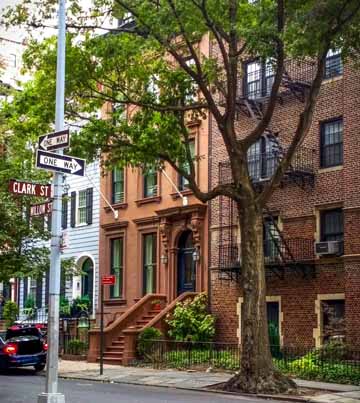
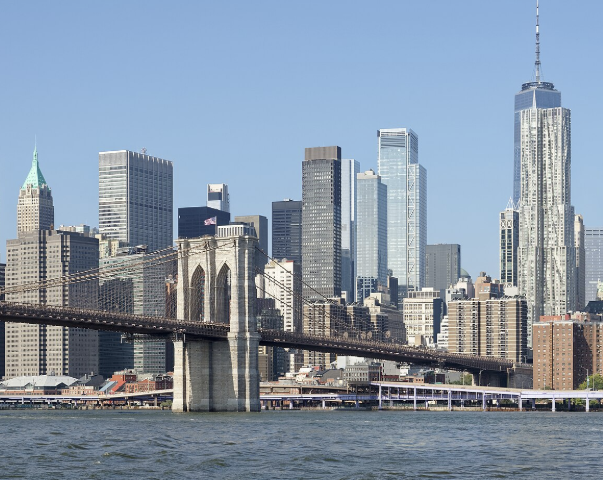
Walk a few blocks into Brooklyn Heights and New York suddenly seems to change its pace. The traffic recedes, trees arch over quiet streets, and rows of nineteenth-century brick and brownstone houses lead toward astonishing views of the Manhattan skyline and the New York Harbor. For anyone searching for things to do in Brooklyn, it is difficult to find a neighborhood that combines history, architecture, and scenery quite so beautifully.
Brooklyn Heights owes much of its early development to transportation. Regular steam ferry service across the East River beginning in 1814 made it possible to live in Brooklyn while working in Manhattan. The New York Public Library has described Brooklyn Heights as the country’s first suburb, while New York City’s Landmarks Preservation Commission notes that its transformation into a residential district began with the arrival of steam-powered ferries in the early nineteenth century.
Much of that early neighborhood survives. Federal houses, Greek Revival townhouses, Gothic Revival buildings, and later brownstones line streets including Willow, Hicks, Pierrepont, and Remsen. In 1965, Brooklyn Heights became New York City’s first historic district, protecting a streetscape that the Landmarks Preservation Commission praised for retaining the atmosphere of a nineteenth-century urban community. At the time, preservation advocates counted more than 680 buildings constructed before the Civil War.
The Heights also played an important role in the nineteenth-century abolitionist movement. Henry Ward Beecher preached against slavery at Plymouth Church, while abolitionists Lewis and Sarah Tappan lived nearby. The city has identified several Brooklyn Heights sites for their connections to the Underground Railroad and the struggle against slavery.
When Brooklyn Heights Became a Movie Star
It is easy to understand why filmmakers fell in love with the neighborhood. Brooklyn Heights can convincingly look like nineteenth-century New York, twentieth-century New York—or simply an idealized version of New York.
The 1987 film Moonstruck, starring Cher and Nicolas Cage, famously used a Brooklyn Heights brownstone and surrounding streets. Steven Spielberg later filmed scenes from Bridge of Spies in the neighborhood, transforming part of the Heights back into 1950s Brooklyn. In fact, the Brooklyn Heights Association once assembled an entire retrospective devoted to movies and television programs filmed here. The tradition continues: in 2026, the Hulu production Count My Lies, starring Lindsay Lohan, Shailene Woodley and Kit Harington, was filmed on Brooklyn Heights streets.
Hollywood has not only filmed here. In recent years, actors including Matt Damon, Emily Blunt and John Krasinski have made Brooklyn Heights home. Damon purchased a Brooklyn Heights penthouse in 2018, while Blunt and Krasinski also purchased an apartment in the neighborhood.
See Brooklyn Heights on a Brooklyn Walking Tour
Our Best of Brooklyn Walking Tour: The Brooklyn Revolution! explores Brooklyn Heights as part of a journey that also includes the Brooklyn Bridge, DUMBO and Brooklyn Bridge Park. Rather than simply passing through the neighborhood, we explore the people, architecture and events that made it extraordinary before finishing amid some of the finest views in New York.
If you’re looking for a Brooklyn walking tour, Brooklyn Bridge walking tour, Brooklyn Heights tour or an unforgettable way to discover the history of Brooklyn, come walk it with us. In Brooklyn Heights, the streets themselves tell the story. Book your Brooklyn Revolution Walking Tour and see one of New York City’s greatest neighborhoods!