
A Minute of History

Blog

Why Does the Declaration of Independence Say “Unanimous” If New York Didn’t Approve It Until July 9?

Best New York City Revolutionary Walking Tour

Every July, Americans celebrate the “unanimous” Declaration of Independence adopted on July 4, 1776. But there’s a fascinating wrinkle hiding behind that famous word: on July 4, the vote wasn’t actually unanimous. New York — a critical colony and future major battleground of the Revolution — had not authorized its delegates to support independence. So why does the document proudly proclaim “the unanimous Declaration of the thirteen united States of America”? The answer reveals the messy, human reality behind one of the nation’s most important moments.

To understand this, we need to step back a couple of days before July 4. On July 2, 1776, the Continental Congress voted on Richard Henry Lee’s resolution declaring the colonies independent from Great Britain. Twelve colonies voted in favor. New York abstained — not because its delegates were loyal to the Crown, but because they were bound by instructions from their Provincial Congress, which had not yet authorized a vote for independence. In an era when delegates followed strict legal instructions from their home governments, they simply could not say yes on their own authority.

Two days later, on July 4, Congress approved the final wording of the Declaration of Independence. New York again refrained from voting. Yet importantly, the colony did not oppose the Declaration either. The delegates understood the direction events were moving — they were simply waiting for official approval from home.

That approval arrived on July 9, 1776, when New York’s Provincial Congress met in White Plains and finally endorsed independence. With that decision, New York’s delegates were free to join their colleagues. In the weeks that followed, as the Declaration was printed, circulated, and eventually engrossed for signing in August, all thirteen states had formally aligned themselves with the revolutionary cause. By the time most delegates signed the famous parchment on August 2, the colonies truly were united — making the description “unanimous” politically accurate, even if it wasn’t technically true on July 4 itself.

New York’s hesitation reflects the colony’s unique position in 1776. Economically tied to Britain, politically divided, and strategically vulnerable, New York faced enormous risks. British forces were already preparing to target the city, and many residents were cautious about a complete break with the empire. Understanding this context adds depth to the story of independence and reminds us that unity was achieved through a process — not a single dramatic moment.

This nuance is just one example of how Revolutionary-era history is often more complex and compelling than what we learned in school. On Revolutionary Tours NYC’s Hamilton & Washington walking tour, visitors explore the real-life settings where New York wrestled with loyalty, resistance, and ultimately revolution. From Federal Hall to Fraunces Tavern and beyond, the tour reveals how figures like Alexander Hamilton and George Washington navigated the uncertain days when independence was far from guaranteed.

So the next time you read the Declaration’s opening line, remember that “unanimous” reflects the final unity the colonies achieved — not the perfectly synchronized vote we often imagine. The road to independence was uneven, cautious, and deeply human — and New York’s late but decisive support is a powerful reminder that the Revolution was built step by step, colony by colony, until a shared vision finally emerged.
👉 Sign up today for the Hamilton & Washington Walking Tour and experience the American Revolution where it happened.

The Perfect New York City Tour for America’s 250th: Washington, Hamilton, and the Revolutionary City

250th Revolutionary Tour New York City

This year, the United States marks its 250th anniversary—the Semiquincentennial—an opportunity to reflect on how a fragile rebellion became a nation. There is no better place to experience that story than New York City, and no better way to encounter it than on the Hamilton & Washington: Secrets of the Past Walking Tour.

New York was not merely a backdrop to the American Revolution—it was one of its central stages. Long before the Declaration of Independence was read aloud in July 1776, New Yorkers were already locked in struggle over liberty, power, and the future of empire. During the Revolution, the city witnessed dramatic protest, crushing defeat, daring escapes, espionage, and—ultimately—the birth of the United States itself. Our Washington & Hamilton tour places you directly on those streets, where history unfolded step by step.

This immersive walking tour explores the Revolution and the early republic through the intertwined lives of George Washington and Alexander Hamilton—two indispensable figures who shaped America’s destiny. Washington, the steadfast Commander-in-Chief and first President, guided the nation through war and into republican government. Hamilton, an orphaned immigrant with towering ambition, helped design the financial and constitutional foundations that allowed the United States to survive. Their partnership—and their tensions—define the Revolutionary era.

As the nation commemorates its 250th anniversary, this tour offers something deeper than monuments and dates. You will encounter the Revolution as lived experience: the Sons of Liberty resisting British taxation, the devastating consequences of the Battle of Brooklyn, Washington’s providential nighttime escape across the East River, and his emotional farewell to the Continental Army at a Manhattan tavern. You’ll stand near the site of Washington’s triumphant inauguration on Wall Street and explore how Hamilton’s economic vision reshaped the future of the nation.

Importantly, the Semiquincentennial demands a fuller story—and this tour delivers it. Alongside Washington and Hamilton, you’ll meet African Americans who fought for freedom, women who sustained the Patriot cause, and lesser-known figures whose contributions were vital to independence. You’ll learn how intelligence networks like the Culper Spy Ring helped save the Revolution, and how ideas expressed in the Federalist Papers secured ratification of the Constitution.

For visitors inspired by Hamilton on Broadway, this tour provides historical depth behind the drama—grounded in scholarship, primary sources, and place-based storytelling. For lifelong history enthusiasts, it offers rare insight into New York’s Revolutionary past. And for the 250th anniversary, it provides something essential: context, complexity, and connection.

As America reflects on its founding at 250 years, join us to walk the city where independence was contested, nearly lost, and ultimately secured. The Semiquincentennial deserves more than a celebration—it deserves understanding.
👉 Sign up today for the Hamilton & Washington Walking Tour and experience the American Revolution where it happened.

Alexander Hamilton and John Laurens: Brotherhood, Ideals, and the Revolutionary War

John Laurens, Alexander Hamilton

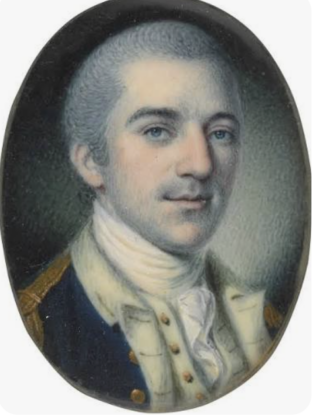
Few friendships of the American Revolution were as intense, idealistic, and emotionally resonant as that between Alexander Hamilton and John Laurens. Forged in wartime and sustained through passionate correspondence, their bond was built on shared values, military ambition, and a belief that the Revolution should live up to its bold promises. Their letters reveal not only political thinking, but an emotional intimacy that still surprises modern readers—and helps explain why their friendship features so prominently in Hamilton the musical.

Hamilton and Laurens met in 1777 while serving as aides-de-camp to George Washington. Both were young, brilliant, and impatient with half-measures. In their letters, they wrote about honor, reputation, and the meaning of liberty, often blending political philosophy with personal affection. Hamilton once wrote candidly to Laurens:

“Cold in my professions, warm in my friendships, I wish it were in my power to tell you how much I love you.”¹

While such language was not unheard of among 18th-century gentlemen, the frequency and depth of their correspondence suggest an unusually close bond. Laurens was a confidant—someone Hamilton trusted with his frustrations, ambitions, and moral convictions.

Shared Ideals and Revolutionary Purpose

What truly united Hamilton and Laurens was a shared vision of what the Revolution should achieve. Laurens was among the most outspoken abolitionists of his generation, advocating the enlistment and emancipation of enslaved men in South Carolina. Hamilton strongly supported the idea, writing:

“I wish, my dear Laurens, it might be in my power… to convince Congress to adopt your plan.”²

Their alignment on slavery—radical for the era—reveals how both men believed independence meant more than separation from Britain.

Brothers in Arms

Hamilton and Laurens were also brothers in uniform, bound by danger and ambition. They belonged to Washington’s inner military “family,” alongside figures like the Marquis de Lafayette. They wrote often about glory, risk, and the frustrations of staff duty. Hamilton once worried that Laurens was “too fond of glory,” a concern that reflected his own willingness to court danger.³

Loss and Legacy

Laurens’ death in 1782—killed in a minor skirmish after the war was effectively over—devastated Hamilton. Writing to General Nathanael Greene, Hamilton mourned:

“Poor Laurens! He has fallen in a paltry skirmish… The world will feel the loss of a man who has left few equals behind him.”⁴

The grief was lasting. Laurens’ death came just as the ideals he fought for seemed within reach, leaving Hamilton—and the new nation—to carry on without him.

Hamilton the musical captures the energy of this friendship—its urgency, idealism, and tragedy—even if it compresses the history. In life, Hamilton and Laurens believed the Revolution could remake the world. In death, Laurens became one of the sacrifices that made that vision possible.

On the Hamilton & Washington in New York walking tour, their friendship is explored as a window into a younger, more radical generation within Washington’s army—men who debated liberty late into the night, challenged each other’s assumptions, and imagined an America that did not yet exist. Standing in the very places where Hamilton later shaped the nation, visitors are invited to consider how much of his vision was forged not only in battle, but in friendship.


  1. Alexander Hamilton to John Laurens, April 28, 1778, Founders Online, National Archives, https://founders.archives.gov/documents/Hamilton/01-01-02-0064.
  2. Alexander Hamilton to John Laurens, March 14, 1779, Founders Online, National Archives, https://founders.archives.gov/documents/Hamilton/01-02-02-0245.
  3. Alexander Hamilton to John Laurens, June 1779, Founders Online, National Archives, https://founders.archives.gov/documents/Hamilton/01-02-02-0270.
  4. (Note: Some June 1779 letters are undated or partially dated; this citation reflects standard archival usage.)
  5. Alexander Hamilton to Nathanael Greene, January 26, 1783, Founders Online, National Archives, https://founders.archives.gov/documents/Hamilton/01-03-02-0204.

Slavery in Revolutionary-Era New York City: An Overlooked Foundation of Urban Life

African Americans in Revolutionary New York

Slavery in New York City was not a rural plantation system; it was an urban and deeply integrated economy. Enslaved men and women served as domestic workers, dock hands, shipboard laborers, artisans’ assistants, and day laborers. Owners often “hired out” enslaved people to merchants, shipwrights, and municipal projects, so enslaved labor flowed through the city while remaining legally owned by households or firms. This arrangement meant enslaved New Yorkers worked alongside free laborers in shipyards, wharves, shops, and households—making bondage visibly present in the city’s everyday life. 

The social texture of bondage in New York was strikingly intimate: most enslavers owned one or two people, and enslaved persons lived and worked within neighborhoods rather than on distant plantations. That closeness produced unique forms of resistance and community. Free and enslaved Black New Yorkers cultivated networks of mutual aid, worship, and labor-based skills; they also used flight, and sometimes service with British forces, to pursue freedom.

The city’s Black community left archaeological and documentary traces—most famously the African Burial Ground discovered in Lower Manhattan—which testify to the size and depth of African-descent life in the city. New York’s economic and legal institutions both protected and constrained slavery. Municipal ordinances regulated movement and assembly for Black people; church registries, court records, and estate inventories document the presence of enslaved labor in nearly every corner of colonial urban life.

At the same time, Revolutionary upheaval and British offers of liberty to Black Loyalists created new opportunities for escape and manumission. Two British proclamations during the Revolutionary War, Dunmore’s Proclamation and the Phillipsburg Proclamation, offered freedom to enslaved people of African descent who belonged to a Patriot. In the decades after the Revolution, an active manumission movement and gradual emancipation laws (culminating in 1827 emancipation in New York State) slowly dismantled legal slavery, but the social and economic effects of centuries of bondage persisted.  Understanding slavery in Revolutionary-era New York City reshapes how we read familiar sites: wharves and warehouses, merchant houses, and civic buildings all depended on coerced labor. For a complete picture of New York’s past—one that recognizes both the city’s commercial energy and the human cost that built it—visitors and residents alike must confront this history directly. Learn more about African Americans in the Revolutionary War on the Hamilton & Washington in New York Walking Tour.

“A Most Critical Comma”: Hamilton, Angelica, and Their Flirty and Witty Correspondence

NYC Hamilton Tour

The surviving letters between Alexander Hamilton and his sister‑in‑law, Angelica Schuyler Church, offer a tantalizing glimpse into a relationship that—though publicly familial—was steeped in warmth, wit, and an emotional intimacy that has fascinated historians and the public alike. . . and informed the song “Satisfied” in the Hamilton musical. While some of their exchanges were clever and even flirtatious, the release of the “Reynolds Pamphlet” in 1797 seems to have altered the dynamic irrevocably.

From one of their more famous exchanges, written 6 December 1787, Hamilton wrote to Angelica:

“You ladies despise the pedantry of punctuation. There was a most critical comma in your last letter. It is my interest that it should have been designed; but I presume it was accidental. Unriddle this if you can. The proof that you do it rightly may be given by the omission or repetition of the same mistake in your next.” (1)

That playful reference to punctuation—a “most critical comma”—caught the public imagination thanks to modern dramatic retellings of their story. But the real letters show a more ambiguous tone. Hamilton closes that letter, after complimenting her and her husband, with a warm: “Adieu ma chere, soeur” — “my dear sister.” (2)

Angelica’s side of the correspondence shows similar intimacy. In a letter from 2 October 1787, writing from London, she confessed to some melancholy and longing for home:

“Indeed my dear, Sir if my path was strewed with as many roses, as you have filled your letter with compliments, I should not now lament my absence from America … but even Hope is weary…” (3)

The comma after “my dear,” rather than “my dear Sir,” is what appears to have triggered Hamilton’s response.

And, expressing how much she missed his company, she told him in a letter dated 4 February 1790:

“I regret America, I regret the separation from my friends and I lament the loss of your society… I cannot now relish the gay world.” (4)

Such phrasing — “loss of your society,” “lament”—suggests an intimacy beyond casual family courtesy. Hamilton wrote to her in 1787, “I seldom write to a lady without fancying the relation of lover and mistress.”  In his letters, Hamilton referred to the “relation of lover and mistress” in a playful way, showing the suggestive undertones of their exchanges. 

Given the constraints and social norms of their time, that admission stands out. But whether their affection went beyond the verbally remains a matter of speculation.

That ambiguity became sharpened after the scandal. The Reynolds Pamphlet, published by Hamilton in 1797, publicly disclosed his affair with Maria Reynolds and financial dealings with her husband — a decision that forever destabilized his private and public life.

Although none of Angelica’s known surviving letters explicitly address the affair or the pamphlet, the tone of their later correspondence noticeably cools. After 1789–1790, her letters tend to refer to him as “dear friend” or “dear Brother,” rarely revisit the playful punctuation banter, and emphasize familial duty.

In historical retrospect, this shifting tone suggests that the scandal may have introduced restraint and distance.  Previously, the tone of their correspondence had been undeniably flirtatious, but it remains unclear whether that teasing warmth hinted at genuine romantic feeling or simply reflected their shared wit and charm.

1. Alexander Hamilton to Angelica Church, December 6, 1787, Founders Online, National Archives, https://founders.archives.gov/documents/Hamilton/01-04-02-0172.

2. Ibid.

3. Angelica Church to Alexander Hamilton, October 2, 1787, Founders Online, National Archives, https://founders.archives.gov/documents/Hamilton/01-04-02-0144.

4. Angelica Church to Alexander Hamilton, February 4, 1790, Founders Online, National Archives, https://founders.archives.gov/documents/Hamilton/01-06-02-0127.

The Remarkable Roeblings and the Making of the Brooklyn Bridge

Best-Brooklyn-Tour

The Remarkable Roeblings and the Making of the Brooklyn Bridge

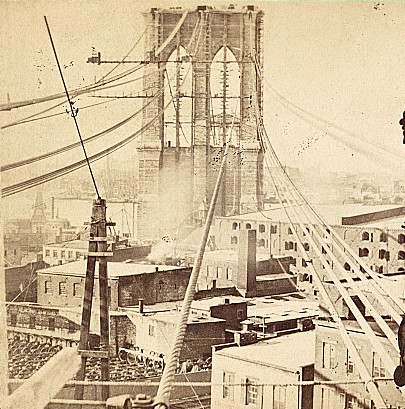
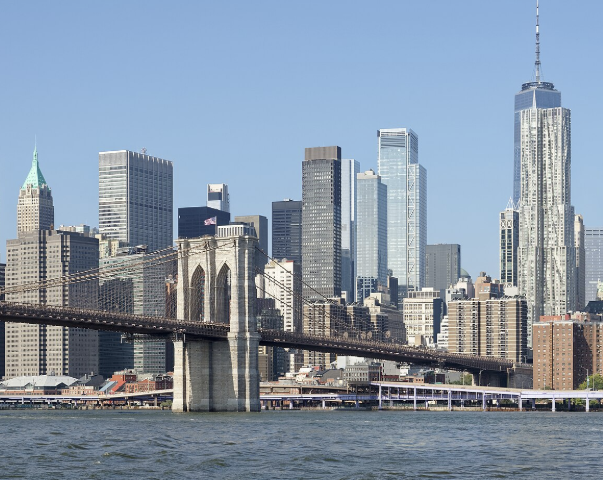
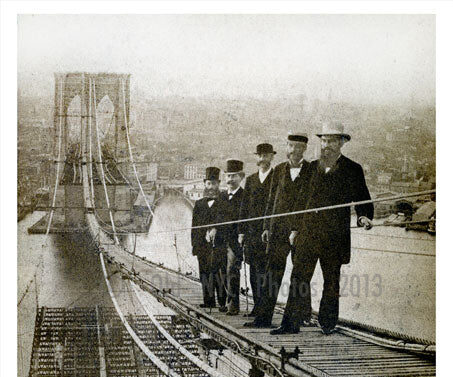
Few landmarks embody New York’s spirit of ambition and ingenuity like the Brooklyn Bridge. Completed in 1883, this engineering marvel linked Manhattan and Brooklyn for the first time, transforming both cities and shaping the destiny of the young nation. Behind this iconic achievement stood three extraordinary figures—John A. Roebling, Colonel Washington Roebling, and Emily Warren Roebling—whose combined brilliance, perseverance, and sacrifice made the impossible possible. Their story is a central highlight of our Best of Brooklyn/Brooklyn Revolution The Best of Brooklyn Walking Tour, where we explore how the fight for freedom, innovation, and identity continued long after the American Revolution.

John Roebling: The Visionary Engineer

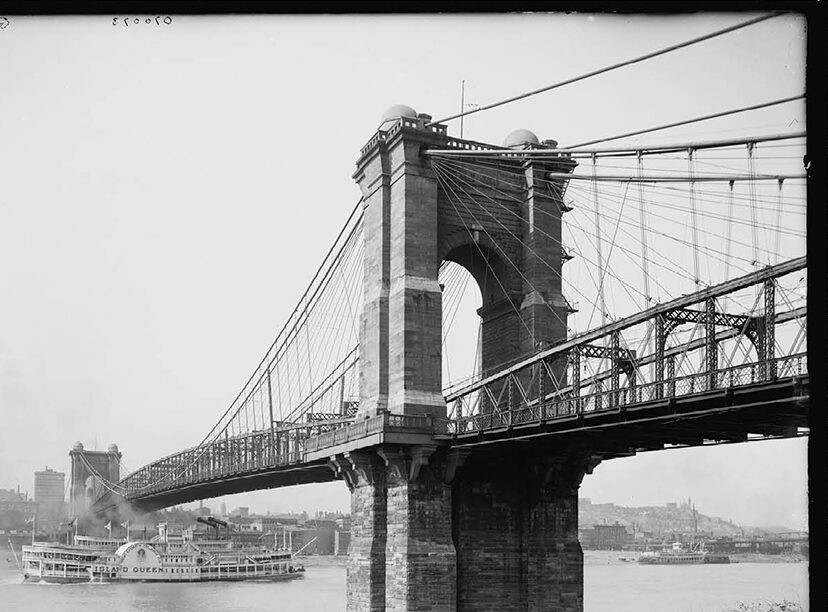
German-born engineer John A. Roebling was already renowned for his pioneering wire-rope suspension bridges, such as the Cincinnati-Covington Bridge, when he proposed a bold new project in the 1860s: a massive suspension bridge stretching across the East River. His design was revolutionary—using steel cables (a Roebling innovation) and Gothic stone towers that would become two of the nation’s most iconic architectural symbols. Roebling envisioned the bridge not just as a feat of engineering, but as a unifying civic triumph that would link the rapidly growing city of Brooklyn with the commercial powerhouse of Manhattan.

Tragically, Roebling never saw construction begin. A crushing accident on the Brooklyn pier led to his death in 1869. But his vision lived on through his son.

Washington Roebling: The Relentless Builder

Colonel Washington Roebling, trained by his father and battle-tested as a Civil War officer, took command of the project at the age of 32. Under his leadership, the team constructed the massive underwater caissons—giant wooden chambers pressurized with air—that allowed workers to dig the foundations of the bridge’s towers deep into the riverbed.

This work came at a tremendous cost. Many laborers suffered from “caisson’s disease,” but Washington himself became the most famous victim. The illness, now understood as decompression sickness, or “the bends,” left him partially paralyzed and confined to his Brooklyn Heights home. Conventional leadership became impossible. But the project did not stop.

Emily Roebling: The Bridge’s Unsung Hero

In stepped Emily Warren Roebling, whose role became legendary. Emily served as Washington’s eyes, ears, and voice on the construction site. She mastered the most complex engineering concepts, relayed her husband’s instructions, negotiated with politicians, and reassured skeptical investors. For over a decade, Emily became the indispensable link that kept the story of the Brooklyn Bridge alive.

When the bridge finally opened on May 24, 1883, Emily rode across it in a ceremonial carriage—the first person ever to cross the finished span.

Explore the Roeblings’ Legacy on the Brooklyn Revolution Tour

The story of the Brooklyn Bridge is about more than cables and towers; it’s about family, resilience, and the evolution of America’s ideals. On our Best of Brooklyn/Brooklyn Revolution Tour, we trace the neighborhood’s history from the Revolutionary era to the Roeblings’ soaring 19th-century achievement. You’ll stand near Washington Roebling’s residence, see key viewpoints of the bridge, and discover how Brooklyn’s spirit of innovation connects the fight for independence with the triumph of one of the world’s greatest engineering feats. You’ll also visit DUMBO, Brooklyn Heights, and Brooklyn Bridge Park with fantastic vistas and American history from the Revolutionary War to the Civil War and beyond. You’ll see New York City in a new way!

Join us and experience the Best of Brooklyn/Brooklyn Revolution Walking Tour.

The Secret North: Hidden Beauty in Central Park’s Quietest Corners

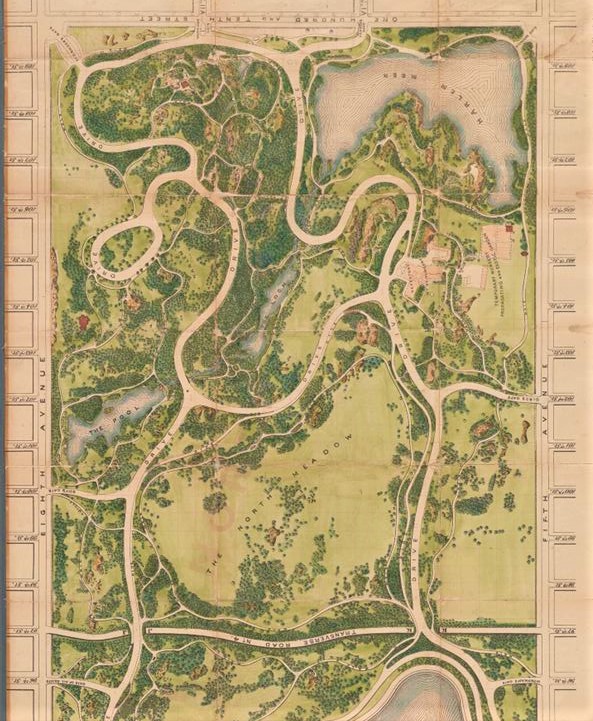
Discover Central Park’s hidden northern wonders — from the wild North Woods and tranquil Pool to the elegant Conservatory Garden and scenic Harlem Meer. Join Revolutionary Tours NYC for the Secret Places of Central Park Tour and uncover the park’s most peaceful and historic corners.


The Secret North: Hidden Beauty in Central Park’s Quietest Corners

Most visitors to Central Park never make it north of 100th Street. Yet some of the park’s most enchanting, mystical, and least-visited landscapes lie beyond it — places where the city seems to melt away, and Olmsted and Vaux’s grand design reveals its most intimate secrets. On our Secret Places of Central Park Tour, we explore these northern gems, where history, artistry, and nature intertwine in surprising ways.

The North Woods – New York’s Wilderness

The North Woods feels like a wilderness transported to Manhattan. Designed to evoke the Adirondacks, it’s a landscape of towering oaks, rustic bridges, and a tumbling stream known as the Loch, winding its way toward Harlem Meer. During the park’s construction between 1858 and 1873, nearly 20,000 workers, many of them Irish and German immigrants, reshaped this rugged terrain by hand. They blasted through bedrock, diverted water through dozens of miles of underground pipes, and planted thousands of trees to create this illusion of natural wilderness. Today, the North Woods remains one of the most peaceful refuges in the entire city — a place where you can hear woodpeckers instead of traffic and follow winding trails that reward the curious wanderer.

The Pool – A Serene Hidden Mirror

Just west of the Woods lies the Pool, a tranquil body of water at 100th Street and Central Park West. It’s one of the park’s loveliest and most overlooked features, surrounded by willows and red maples that reflect perfectly in the water’s surface. In spring and fall, migratory birds rest here, while in winter, the scene turns into a snow-dusted tableau worthy of a painting. The Pool captures Olmsted and Vaux’s genius for designing spaces that look entirely natural yet were painstakingly crafted to offer changing beauty with each season.

The Conservatory Garden – A Formal Oasis

A few blocks east at Fifth Avenue and 105th Street stands the Conservatory Garden, a masterpiece of horticultural artistry hidden behind the ornate Fifth Avenue Vanderbilt Gate. Divided into three distinct styles — Italian, French, and English — this six-acre garden bursts with color and structure from the spring through the fall. It’s one of the park’s quietest corners, missed by even seasoned New Yorkers. Whether it’s the symmetry of the Italian terrace or the romantic Secret Garden of the English area, every section reveals another layer of Central Park’s personality — cultivated, elegant, and serene.

Harlem Meer – The Park’s Northern Lake

At the park’s northeast edge lies Harlem Meer, a shimmering lake bordered by elms and willows and framed by a view of Harlem’s skyline. The word Meer means “lake” in Dutch, a nod to the area’s early colonial history. In Olmsted and Vaux’s design, the Meer served as both a picturesque water feature and a recreational gathering place. Today, it remains one of the park’s most tranquil settings — perfect for birdwatching, or simply standing by the shore as the light ripples across the water. The Meer represents the ideal balance between nature and city — the kind of harmony Central Park was built to create.

Discover the North with Us

These northern landscapes and other areas of the areas of the northern park tell a quieter story of Central Park — one of tranquility, mystery, and discovery. On our Secret Places of Central Park Tour, you’ll explore these hidden sanctuaries, uncover the history behind their design, and experience a side of the park most visitors never see.

Best Central Park Walking Tour in New York City

Exploring Central Park’s Secret Northern End: Hidden History, Scenic Trails & Peaceful Escapes

Best Central Park Walking Tour

When most visitors think of Central Park, they picture Bethesda Terrace, the Bow Bridge, or the Great Lawn. Yet the park’s northern end — stretching from 100th Street to 110th Street — offers some of its most serene and spectacular landscapes, richest history, and least-crowded experiences. From the woodlands of the North Woods to the elegant Conservatory Garden and the historic forts of the Revolutionary War, this part of Central Park is a hidden gem that rewards those who venture beyond the familiar.

The North Woods: A Wilderness in Manhattan

At 40 acres, the North Woods is the largest of Central Park’s three woodlands, designed to evoke the feeling of the Adirondack forest. Winding paths, rustic bridges, and a serene stream known as the Loch make it a tranquil retreat right in the heart of Manhattan. Visitors can follow the Ravine Trail through dense oaks and maples, listening to waterfalls that flow from the Pool at 100th Street down to the Harlem Meer.

This area is a paradise for birdwatchers and photographers alike. You’ll find migrating warblers in spring, red-tailed hawks soaring above, and even the occasional heron fishing in the waters below. For locals and visitors seeking nature and solitude, the North Woods is one of the best-kept secrets of Central Park’s northern end.

The Conservatory Garden: Central Park’s Only Formal Garden

A short walk east of the North Woods, lies the Conservatory Garden — a masterpiece of landscape design and one of the park’s most peaceful places. You’ll find three distinct styles: the Italianate garden with its grand fountain and terraces, the French garden with seasonal tulips and the fountain of Three Dancing Maidens, and the English garden featuring a reflecting pool and lush perennials.

The fully-restored Conservatory Garden is an oasis of tranquility far from the park’s busier southern half. It’s also a favorite destination when flowers and foliage are at their peak. For anyone searching for romantic spots in Central Park or hidden gems in Upper Manhattan, this is a must-see.

Revolutionary Forts, History & Hidden Stories

Few visitors realize that the northern end of Central Park played an important defensive role in New York City’s Revolutionary War and War of 1812 history. The park’s high points — Fort Clinton, Fort Fish, and Nutter’s Battery — were part of a line of defensive fortifications built by American forces in 1814 during the War of 1812, on or near earlier Revolutionary War positions. The oldest original structure in the park is a Blockhouse from the War of 1812. The views of Harlem and the Bronx from its bluff are impressive.

Go Beyond the Map: Discover the Secret Places of Central Park

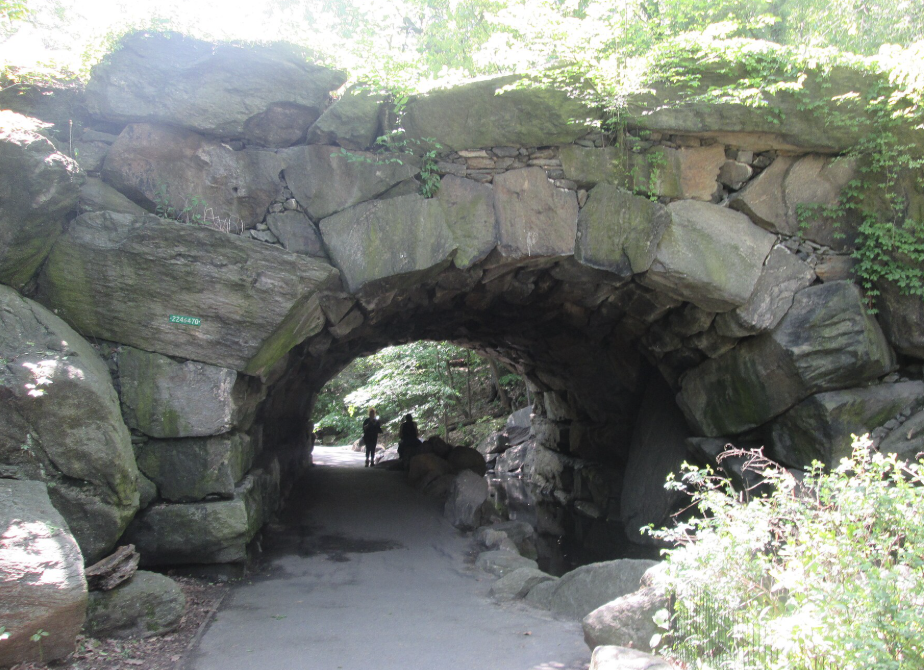
Want to uncover even more of Central Park’s hidden history, forgotten forts, and surprising stories? You’ll learn about Frederick Law Olmsted and Calvert Vaux’s vision for the first large-scale public park in the United States. You’ll also discover the fascinating pre-park history, including the Seneca Village community, an African American and immigrant community that preceded the park’s construction. Join Revolutionary Tours NYC for the acclaimed Secret Places of Central Park Tour — a deep dive into the park’s untold history, design secrets, and natural wonders. Led by a passionate historian, this immersive walking tour reveals areas most visitors never find on their own — from mysterious arches and hidden trails to sites where history was made.

Book your Secret Places of Central Park experience today at RevolutionaryToursNYC.com and see America’s greatest urban park in a whole new light.

The Hamilton & Burr Duel Letters

Best Hamilton Tour in New York City

The duel between Aaron Burr and Alexander Hamilton on July 11, 1804 was one of the most infamous events in American history, rooted in fierce political rivalry and personal animosity. Their conflict erupted after a contentious New York gubernatorial race, where Burr, then Vice President, lost to Morgan Lewis, partly due to Hamilton’s vocal opposition to his candidacy. The final catalyst for the duel came when a letter from Dr. Charles D. Cooper, published in the Albany Register, accused Hamilton of describing Burr as an untrustworthy “dangerous man,” and of having expressed “a still more despicable opinion” of Burr.

The Cooper Letter in the Albany Register

Dr. Cooper’s letter read:

“I assert that Gen. Hamilton and Judge Kent have declared, in substance, that they looked upon Mr. Burr to be a dangerous man, and one who ought not to be trusted with the reins of government.” (1)

Cooper further reported Hamilton’s supposed utterance of an even worse “despicable” opinion, which triggered Burr to confront Hamilton directly. This public airing of private resentments created a scandal Burr felt demanded satisfaction.

Burr’s Letters to Hamilton

Upon seeing Cooper’s published remarks, Burr sent his first challenge letter to Hamilton on June 18, 1804:

“You must perceive, sir, the necessity of a prompt and unqualified acknowledgement or denial of the use of any expression that would warrant the assertions of Dr. Cooper.” (2)

Burr demanded Hamilton either confirm or deny he made the statements attributed to him. Hamilton’s reply was evasive, refusing a categorical answer, which inflamed the conflict. Burr followed up with another letter dated June 22:

“I relied with unsuspecting faith that from the frankness of a Soldier and the Candor of a gentleman I might expect an ingenuous declaration; that if, as I had reason to believe, you had used expressions derogatory to my honor, you would have had the Spirit to Maintain or the Magnanimity to retract them…” (3)

Burr made clear that only an explicit apology or retraction would suffice, expressing disappointment at what he saw as Hamilton’s equivocation.

Hamilton’s Responses

Hamilton’s replies were measured but firm. In his June 20, 1804 letter, Hamilton rebuffed Burr’s demand:

“I have become convinced, that I could not, without manifest impropriety, make the avowal or disavowal which you seem to think necessary.” (4)

Hamilton further explained that his statements about Burr were general political criticisms and not a direct attack on Burr’s honor. He conceded to “abide by the consequences,” implicitly accepting the possibility of a duel. Throughout these exchanges, Hamilton maintained a tone of civility and principle, while trying to avoid a public retraction and escalation, but Burr saw this as evasion.

The Path to the Duel

The repeated written refusals to apologize and escalating tone brought both men to an impasse. Burr closed his final letter:

“Thus, sir, you have invited the course I am about to pursue, and now your silence impose it upon me.” (5)

Hamilton, meanwhile, prepared drafts in case he would not survive, expressing his moral aversion to dueling but accepting the practical realities of honor and reputation in that era.

These exchanges show how the collision of politics and pride produced one of America’s defining moments, ending in Hamilton’s early demise and reshaping the early republic’s view of honor and violence.

The unfortunate conclusion of the Burr–Hamilton duel reveals a profound complexity at the heart of their relationship, shaped by fifteen years of political rivalry, deep-seated mistrust, and competing ambitions for influence in the new nation. Though both men had worked together in law and served in the American Revolution, their differences became irreconcilable as Burr’s flexible political allegiances repeatedly clashed with Hamilton’s principled Federalism, leading Hamilton to view Burr as an obstacle to the country’s future. Hamilton’s letter before the duel admitted no personal hatred, but emphasized his duty to oppose Burr for the greater good.

For both Hamilton and Burr, the concept of honor was not merely personal character, but a public currency essential for survival in the Early Republic. Burr’s demand for a full retraction was rooted in the era’s sometimes unforgiving standards, where reputation dictated power; refusing the challenge would have meant public humiliation and hence political death for either man. Hamilton, meanwhile, struggled with the moral consequences of dueling but understood that conceding would compromise his usefulness and legacy as a leader.  Ultimately, their ideas of honor forced them onto the dueling ground—not out of animosity alone, but from a belief that only through defending reputation could they uphold their dominance, even at ultimate personal cost. The heartbreak was not just in the loss of Hamilton’s life, but in the way their fixation on personal honor transformed a private quarrel into a moment that transformed early American political culture.

Explore Alexander Hamilton and Aaron Burr in the Hamilton & Washington in New York walking tour, offered as both a public and private tour. Book the tour today!

Sources:

  1. Founders Online: Enclosure: Charles D. Cooper to Philip Schuyler, April 23, 1804
  2. The June 18 Letter – Hamilton’s Choice
  3. Aaron Burr Challenges Alexander Hamilton, 1804 | Gilder Lehrman
  4. Hamilton-Burr Duel (U.S. National Park Service)
  5. Aaron Burr Challenges Alexander Hamilton, 1804 | Gilder Lehrman

Seneca Village: A Remarkable African American and Immigrant Community

Seneca Village Tour in Central Park

In the heart of what is now the Central Park landscape once stood Seneca Village, a vibrant and empowered African American and immigrant community that existed on the land between 1825, two years before the end of slavery in New York State, and 1857.  The community was between 82nd and 89th Streets and between Seventh and Eighth Avenues.  Seneca Village was established when white property owners John and Elizabeth Whitehead, uptown landowners, subdivided their property and sold off 200 lots. The first buyer was Andrew Williams, a 25-year-old African American bootblack (shoe shiner) who purchased three lots for $125.  Williams was soon joined by others seeking opportunity and refuge from the crowded, disease-ridden, and discriminatory conditions of Lower Manhattan. Epiphany Davis, a store clerk, bought 12 lots for $578, and the African Methodist Episcopal Zion Church acquired six more.  By the mid-1850s, it had grown to around 50 homes, three churches, a school for African-American children, and burial grounds. White European immigrants began moving to Seneca Village in the 1840s.

Seneca Village was remarkable not just for its growth but for its diversity and autonomy. At its peak, the community numbered about 225 residents, two-thirds of whom were Black, with the rest being Irish and possibly German immigrants. More than half of the Black residents were property owners, a rare achievement since, at the time, only 10% of the city’s entire population owned land.  This land ownership also conferred the right to vote for Black men (a $250 property-ownership requirement and three years’ residency in the state began in 1821), as well as stability and self-determination.

Andrew Williams, the village’s first landowner, lived there with his wife, Elizabeth, and their family from 1825 until 1857, when the city acquired the land through eminent domain to create Central Park. Williams’s story is emblematic of the community: he built a home, raised a family, and participated in a thriving middle-class neighborhood that included churches, schools, and gardens.  Epiphany Davis, another prominent resident, invested in multiple lots and helped anchor the village’s economic and social fabric.

The landscape of Seneca Village was varied, featuring rolling hills, rocky outcrops, and meadows. Residents cultivated gardens, raised livestock, and drew water from a natural water source that became known as Tanner’s Spring, while orchards and barns dotted the landscape.

Seneca Village offered a rare sanctuary of Black property ownership and community in antebellum New York. Its erasure in 1857 for Central Park’s creation was a profound loss, but ongoing research, archaeological work, and public commemoration since it’s rediscovery in 1992—by historians Roy Rosenzweig and Elizabeth Blackmar—are restoring its rightful place in the city’s history—a testament to resilience, aspiration, resourcefulness, and community in the face of adversity.  Find more about Seneca Village on the Secret Places of Central Park and Central Park Experience walking tours, as well as a private tour focusing on Seneca Village offered for groups of adults, students, and corporate employees.