
Category: Brooklyn Bridge

The Remarkable Roeblings and the Making of the Brooklyn Bridge

Best-Brooklyn-Tour

The Remarkable Roeblings and the Making of the Brooklyn Bridge

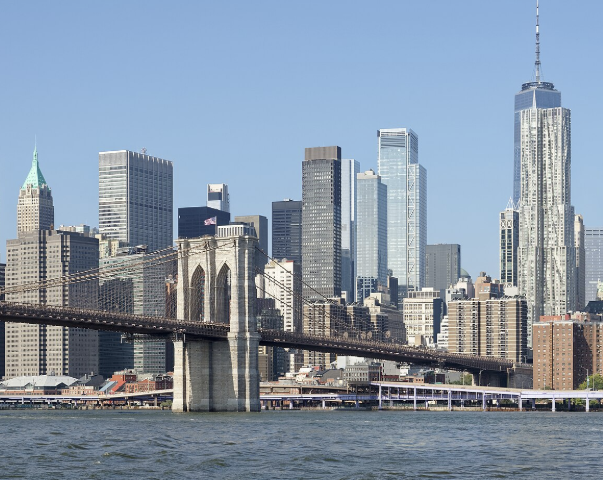
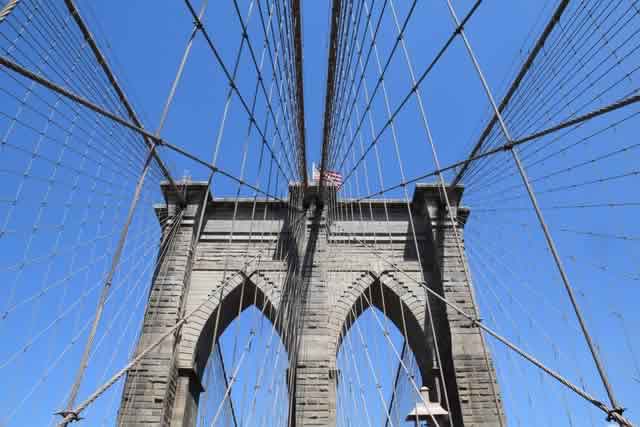
Few landmarks embody New York’s spirit of ambition and ingenuity like the Brooklyn Bridge. Completed in 1883, this engineering marvel linked Manhattan and Brooklyn for the first time, transforming both cities and shaping the destiny of the young nation. Behind this iconic achievement stood three extraordinary figures—John A. Roebling, Colonel Washington Roebling, and Emily Warren Roebling—whose combined brilliance, perseverance, and sacrifice made the impossible possible. Their story is a central highlight of our Best of Brooklyn/Brooklyn Revolution The Best of Brooklyn Walking Tour, where we explore how the fight for freedom, innovation, and identity continued long after the American Revolution.

John Roebling: The Visionary Engineer

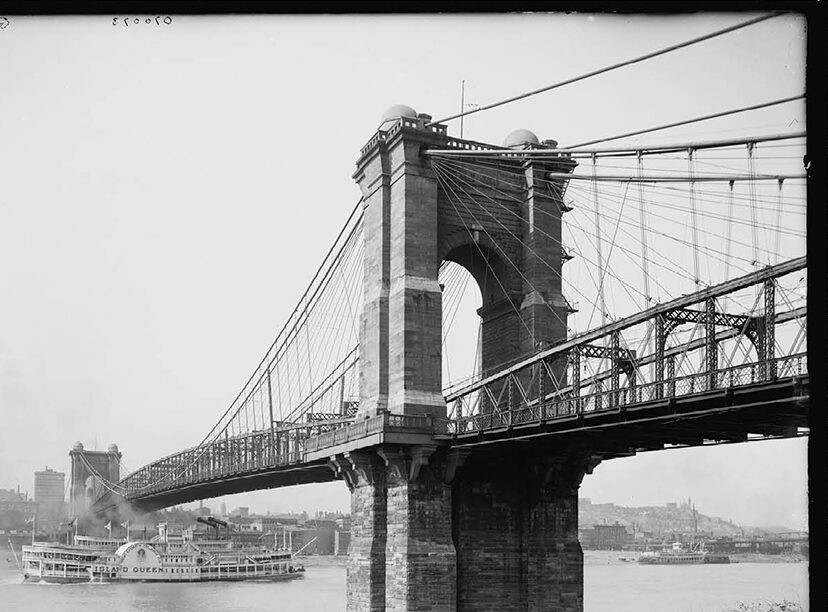
German-born engineer John A. Roebling was already renowned for his pioneering wire-rope suspension bridges, such as the Cincinnati-Covington Bridge, when he proposed a bold new project in the 1860s: a massive suspension bridge stretching across the East River. His design was revolutionary—using steel cables (a Roebling innovation) and Gothic stone towers that would become two of the nation’s most iconic architectural symbols. Roebling envisioned the bridge not just as a feat of engineering, but as a unifying civic triumph that would link the rapidly growing city of Brooklyn with the commercial powerhouse of Manhattan.

Tragically, Roebling never saw construction begin. A crushing accident on the Brooklyn pier led to his death in 1869. But his vision lived on through his son.

Washington Roebling: The Relentless Builder

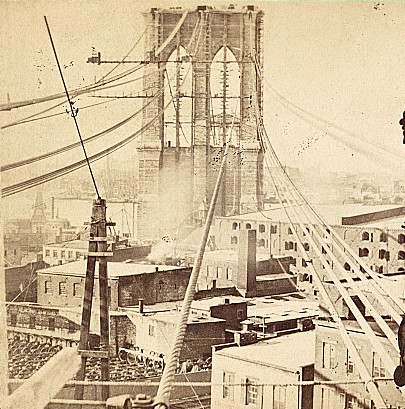
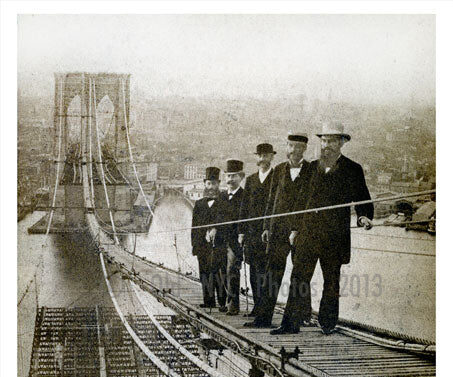
Colonel Washington Roebling, trained by his father and battle-tested as a Civil War officer, took command of the project at the age of 32. Under his leadership, the team constructed the massive underwater caissons—giant wooden chambers pressurized with air—that allowed workers to dig the foundations of the bridge’s towers deep into the riverbed.

This work came at a tremendous cost. Many laborers suffered from “caisson’s disease,” but Washington himself became the most famous victim. The illness, now understood as decompression sickness, or “the bends,” left him partially paralyzed and confined to his Brooklyn Heights home. Conventional leadership became impossible. But the project did not stop.

Emily Roebling: The Bridge’s Unsung Hero

In stepped Emily Warren Roebling, whose role became legendary. Emily served as Washington’s eyes, ears, and voice on the construction site. She mastered the most complex engineering concepts, relayed her husband’s instructions, negotiated with politicians, and reassured skeptical investors. For over a decade, Emily became the indispensable link that kept the story of the Brooklyn Bridge alive.

When the bridge finally opened on May 24, 1883, Emily rode across it in a ceremonial carriage—the first person ever to cross the finished span.

Explore the Roeblings’ Legacy on the Brooklyn Revolution Tour

The story of the Brooklyn Bridge is about more than cables and towers; it’s about family, resilience, and the evolution of America’s ideals. On our Best of Brooklyn/Brooklyn Revolution Tour, we trace the neighborhood’s history from the Revolutionary era to the Roeblings’ soaring 19th-century achievement. You’ll stand near Washington Roebling’s residence, see key viewpoints of the bridge, and discover how Brooklyn’s spirit of innovation connects the fight for independence with the triumph of one of the world’s greatest engineering feats. You’ll also visit DUMBO, Brooklyn Heights, and Brooklyn Bridge Park with fantastic vistas and American history from the Revolutionary War to the Civil War and beyond. You’ll see New York City in a new way!

Join us and experience the Best of Brooklyn/Brooklyn Revolution Walking Tour.

Brooklyn Bridge Designer John Roebling’s Other Bridges

Best Brooklyn Bridge Tour

John Roebling the engineer and architect of the Brooklyn Bridge had already been a prominent designer of suspension bridges before his great bridge connecting the cities of New York and Brooklyn. He was also a manufacturer of twisted wire rope used for suspension bridges. His factory was based in Trenton, New Jersey. He designed the Niagra River Gorge Bridge in 1885, the Sixth Street Bridge in Pittsburgh, Pennsylvania in 1859, and the Covington-Cincinnati Bridge now known as the John A. Roebling Bridge Suspension Bridge in 1867, just two years before the Brooklyn Bridge started construction. That last bridge had been the longest suspension bridge in the world at 1057 feet for the main span before the Brooklyn Bridge was completed in 1883 with its main span at 1595.5 feet.

Brooklyn Bridge Fallout Shelter

Best Brooklyn Bridge Walking Tour

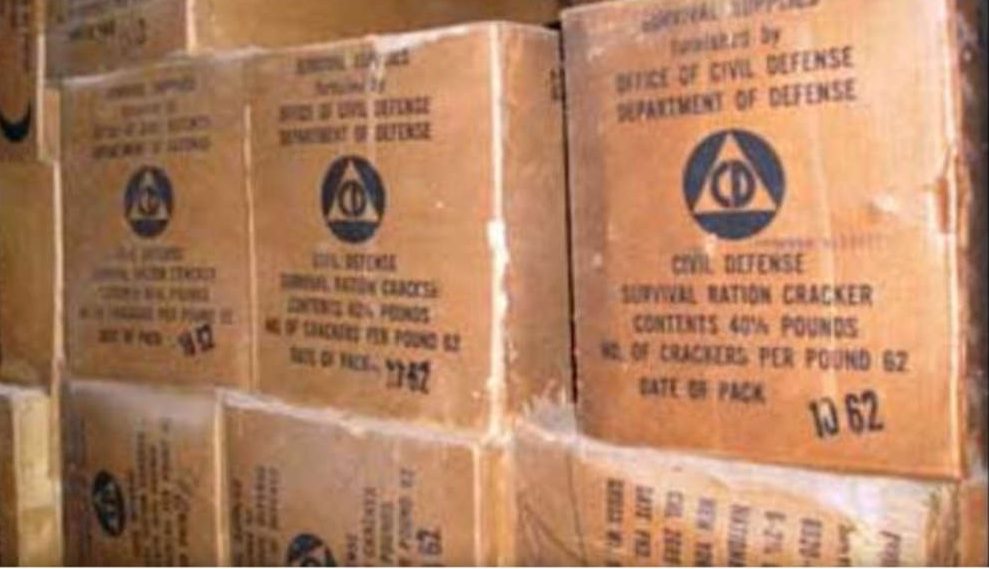
In 2006, as the city was performing an inspection of the Brooklyn Bridge to uncover structural abnormalities, they made an unusual find. In a dark and dank arched structure on the shoreline of the East River, underneath the bridge and near the Manhattan anchorage they found “medical supplies, paper blankets, drugs,” a stockpile of cold-war-era 17.5-gallon water drums that could be reused “as a commode,” 352,000 Civil Defense All-Purpose Survival Crackers (calorie-packed crackers that were probably still edible), along with doses of Dextran, a drug used to treat or prevent shock. This was reported by the NY Times. The items were stored during the cold war, evident from the supply boxes stamped with dates from 1957 and 1962, dates that correspond to the Soviet launching of the satellite Sputnik and the Cuban Missile Crisis, respectively. The room was still intact and had been for years without the city’s knowledge.

photo CBS News

21 Elephants on the Brooklyn Bridge

Brooklyn-Elephant-Jumbo

The Brooklyn Bridge, which we walk over on the “Best of Brooklyn-The Brooklyn Revolution” tour , was a massive achievement in the annals of engineering. It cost over 15 million dollars and took from 1869 to 1883 to build it, but much of the populace did not trust suspension bridges. It was publicly known that a large percentage of them collapsed. Just six days after the bridge opened on May 24, 1883, with thousands of people on the bridge, a woman tripped a staircase on the bridge, another woman let out a scream, and the crowd pushed forward and down the stairs, creating a panic and stampede. As it was reported in the newspaper: “Those following were in turn pushed over and in a moment the narrow stairway was choked with human beings, piled one on top of the other, who were being crushed to death. In a few minutes, 12 persons were killed, 7 injured so seriously that their lives are despaired of, and 28 others more or less severely wounded.”

When the police cleared the Brooklyn Bridge, the bridge was covered with articles of clothing and other belongings including 42 umbrellas and parasols, 6 canes, 34 bonnets, a skirt and 6 pairs of shoes.

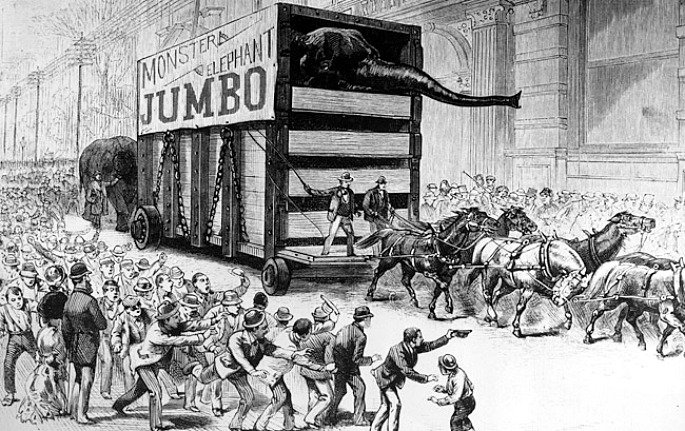
Never one to turn down a public relations opportunity, the impresario P.T. Barnum, used this tragedy to show the bridge’s herculean strength on May 17, 1884 by having 21 elephants, plus 10 camels and 7 dromedaries march across the bridge, with his most famous elephant Jumbo, bringing up the rear.

Roasting in Brooklyn

Best Brooklyn Tour DUMBO coffee

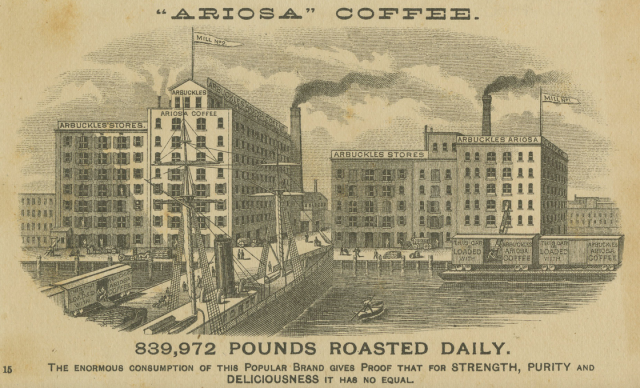
Not long after the Civil War, the brothers John and Charles Arbuckle, revolutionized and started a new industry in today’s DUMBO, Brooklyn, by offering roasted coffee to consumers in single pound packages. Before that, coffee beans were purchased green and roasted at home over a fire or in a wood stove; getting a consistent and palatable end product was challenging. The Arbuckle Brothers had such a popular product that they shipped their coffee throughout the country. Marketing their product under the Ariosa and Yuban brands, they were still going through the 20th Century…and the Yuban brand is still around even today. On the Brooklyn Revolution tour, we visit the amazingly renovated Empire Stores, the site and facility used by the Arbuckle Brothers to process their coffee until they sold it in the 1940s.

Fulton’s Ferry in Brooklyn

Best Brooklyn Bridge Walking Tour

Robert Fulton is undoubtedly, one of the most important people in the history of New York City. He is credited with commercializing the steamboat. His first boat, the Clermont, took travelers on a 150 mile trip up the Hudson River from New York City to Albany. The steamboat had a tremendous influence on trade and transportation improving both reliability and speed. In 1814, the wealthy Brooklyn landowner Hezikiah Pierrepont (as in Pierrepont Place), teamed up with Fulton, and took at 25-year lease on the ferry route between New York City and Brooklyn. The first steam-powered Nassau boat, made regularly scheduled trips between New York and Brooklyn and vice-versa, and effectively reduced the time in the winter and in storms from up to about 1.5 hours to only 12 minutes. We visit the Fulton Ferry landing on the Brooklyn walking tour and on the Hamilton & Washington tour we see the monument to Robert Fulton (near where he is buried) in the Trinity Church cemetery. Although the Brooklyn Bridge, completed, in 1883, reduced the steamboats viability, the Fulton Ferry operated until 1924. New York City currently offers a similar route from the Fulton Ferry landing to Wall Street in Manhattan. The photo is of Robert Fulton’s life mask done by Jean Antoine-Houdon, who also did George Washington’s life mask.


Walt Whitman’s Brooklyn

Best Brooklyn Walking Tour

In 1862, Walt Whitman, resident of Brooklyn Heights wrote the following:

“Why then should not Brooklyn, in the experience of persons now living, become a city of a great million inhabitants? We have no doubt it will. We can not go over the list and description of our public institutions in this paper, although we intend to do so one of these days. We have not, in a modern city like Brooklyn, such marked specimens of magnificent architecture as the ancient or mediaeval cities presented, and many of whose ruins yet remain. For our architectural greatness consists in the hundreds and thousands of superb private dwellings, for the comfort and luxury of the great body of middle class people–a kind of architecture unknown until comparatively late times, and no where known to such an extent as in Brooklyn, and the other first class cities of the New World.”

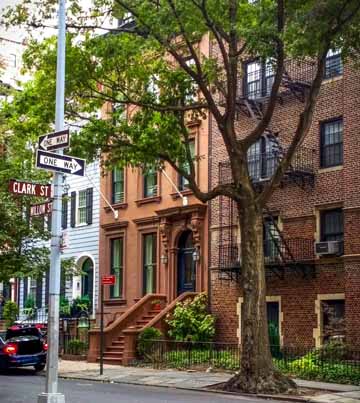
Whitman was correct about the “great million inhabitants” that Brooklyn would achieve and the “greatness” of the architecture. See the houses he is referring to on the Brooklyn Revolution (aka Best of Brooklyn Tour)

The Great Woman Behind the Brooklyn Bridge

Brooklyn Bridge, Brooklyn Heights, DUMBO, Brooklyn Bridge Park Walking Tour

Brooklyn Bridge, Brooklyn Heights, DUMBO, Brooklyn Bridge Park Walking TourTruly, much of the credit for the completion of the Brooklyn Bridge under the stewardship of Washington Roebling, goes to his wife Emily Roebling.  After his illness caused by “caisson disease” or what we now know as the bends or decompression sickness and his inability to visit the bridge, Emily learned all that she needed about bridge construction and engineering to serve as Washington’s liaison with the assistant engineers on-site.  She explained Washington’s often complex directives and answered questions that they had.  In 1882, the year before the bridge was completed, Emily successfully defended her husband to the board of directors and politicians who wanted to strip him of his title as Chief Engineer.

There is a plaque on the Brooklyn tower of the Brooklyn Bridge dedicated to the memory of Emily Roebling “whose faith and courage helped her stricken husband…complete the construction of this bridge…Back of every great work we can find the self-sacrificing devotion of a woman”

Washington Roebling wrote: I thought I would succumb, but I had a strong tower to lean upon, my wife, a woman of infinite tact and wisest counsel.